

Author: Vigor Forty Editorial Team
Medically Reviewed By: Editorial Review Board
Disclaimer: This article is for informational purposes only and is not a substitute for professional medical or dietary advice. Read our full Medical Disclaimer.
📌 Key Takeaways
- The Mediterranean Diet Is the Most Heavily Researched and Protective Eating Pattern for Americans Over 40: It consistently lowers the risk of heart disease, stroke, type 2 diabetes, cognitive decline, and even certain cancers. You don’t need to move to Greece. You just need to shift the ratio of foods on your plate using ingredients available at any American grocery store.
- You Do Not Need to Meal Prep to Eat Mediterranean: The standard advice—batch-cook grains, chop vegetables, portion proteins—is a barrier for people who hate cooking or lack time. This blueprint uses habit-stacking, ready-to-eat shortcuts, and a simple plate framework to build Mediterranean meals in under 10 minutes, with almost no prep.
- It’s a Pattern, Not a Prescription: The goal is not a rigid meal plan. It’s a flexible set of tiny food habits—adding a handful of greens, using olive oil, eating fish twice a week, snacking on nuts instead of chips—that compound into the Mediterranean pattern without counting macros or restricting entire food groups.
- Frozen, Canned, and Pre-Cut Are Not Cheating: Frozen spinach, canned beans, pre-washed salad greens, rotisserie chicken, and microwaveable quinoa are completely compatible with this diet. They remove the friction that causes takeout and processed food to win on busy weeknights.
- This Blueprint Stacks Directly onto Your VigorForty Supplement and Habit Systems: Omega-3s from fish amplify your supplement, magnesium-rich greens support blood pressure, and the habit of a post-dinner walk after a Mediterranean meal magnifies the metabolic benefits. Your plate, your pills, and your movement all reinforce each other.
Introduction: The Best Diet for Your Heart Doesn’t Require a Single Recipe
If the phrase “Mediterranean diet” brings to mind elaborate cookbooks, unfamiliar spices, and hours of chopping, blanching, and roasting, I have good news: that’s entirely optional. The eating pattern consistently ranked #1 by U.S. News & World Report, endorsed by the American Heart Association, and backed by decades of clinical trials is not a specific set of recipes. It’s a simple, forgiving ratio of everyday foods.
The research is overwhelming. The PREDIMED trial, a landmark study of over 7,000 high-risk adults, found that a Mediterranean diet supplemented with extra-virgin olive oil or nuts reduced the risk of major cardiovascular events by roughly 30% compared to a standard low-fat diet. Other studies link this pattern to slower cognitive aging, lower inflammation, improved gut health, and better weight management—all without calorie counting.
But the gap between knowing this and doing it remains wide for millions of Americans. The reason is simple: most Mediterranean diet guides ask you to become a different person—a person who enjoys meal prepping, shopping at specialty markets, and spending an hour in the kitchen each evening. This blueprint assumes you are exactly who you are right now: busy, perhaps a bit tired, possibly cooking-averse, but deeply motivated to protect your heart and brain after 40. You’ll learn the core framework, the habit-stacking food moves that take under two minutes, the grocery store shortcuts that make compliance effortless, and a 7-day kickstart that requires zero formal meal prep. The Mediterranean diet isn’t a cooking class. It’s a series of tiny, stackable food decisions that, over time, become the automatic rhythm of your kitchen.
Section 1: The Mediterranean Plate Framework—No Recipes Required
Forget recipe books. If you can build a plate using this simple visual framework, you are eating Mediterranean.
The Four-Quadrant Plate (Every Meal, Including Breakfast):
- Half the plate: Vegetables and/or fruit. Colorful, non-starchy vegetables dominate. Think leafy greens, tomatoes, bell peppers, broccoli, zucchini, cucumbers, berries, citrus. Frozen and pre-washed are perfectly acceptable.
- One-quarter of the plate: Whole grains or legumes. Farro, quinoa, brown rice, whole-wheat bread, chickpeas, lentils, white beans. Instant or microwaveable versions count.
- One-quarter of the plate: Lean protein. Fatty fish (salmon, sardines, tuna), poultry, eggs, or legumes as the protein star. Red meat is limited to a few times per month.
- A generous drizzle of extra-virgin olive oil. This is non-negotiable. EVOO is the primary added fat, providing polyphenols, vitamin E, and oleic acid. It replaces butter, margarine, and processed dressings.
Add-Ons:
- A handful of nuts or seeds (walnuts, almonds, flaxseed).
- Herbs and spices instead of salt for flavor.
- Water or unsweetened tea/coffee as the primary beverage. Red wine is optional (1 glass for women, up to 2 for men, only if you already drink it). No one starts drinking for health.
The American Swap Habit: This framework works with your existing meals. Taco night? Use a whole-grain tortilla, load with black beans, grilled chicken, chopped tomatoes, lettuce, avocado, and a drizzle of olive oil instead of sour cream. Burger night? Grill a salmon patty, serve on a whole-wheat bun with arugula, tomato, and a swipe of olive oil mayo. Pizza night? A whole-grain pita topped with marinara, vegetables, and a moderate sprinkle of mozzarella. You are not replacing your life; you’re upgrading the components.
Section 2: The “No-Metal-Prep” Habit Stacking Kitchen Moves
The behaviors below use the same habit-stacking formula you learned in our Habit Design articles. Each tiny move takes less than 2 minutes and attaches to an existing anchor.
The Olive Oil Swap (The Single Highest-Impact Move):
- Anchor: After I plate any meal, I will drizzle extra-virgin olive oil on the vegetables or grain.
- Why: A 2022 study in the Journal of the American College of Cardiology found that consuming more than half a tablespoon of olive oil daily was associated with a 19% lower risk of cardiovascular death. The polyphenols protect LDL from oxidation. This one drizzle replaces inflammatory seed oils and butter instantly.
The Greenery Grab:
- Anchor: After I open the fridge for any meal, I will put one handful of pre-washed greens (spinach, arugula, mixed salad) on the plate first.
- Why: Greens are the cornerstone. This tiny move ensures half your plate is covered with potassium, magnesium, nitrates, and fiber before you add anything else. It requires zero knife work.
The Fish-in-a-Can Convenience Habit:
- Anchor: On Tuesday and Friday evenings, after I decide “what’s for dinner,” I will reach for canned wild salmon, sardines, or tuna (in olive oil) as the protein base.
- Why: Two servings of fatty fish per week is a core Mediterranean principle, delivering the EPA and DHA that complement your omega-3 supplement. Canned fish is pre-cooked, shelf-stable, and requires only opening. Mix with a squeeze of lemon and a dollop of Greek yogurt for an instant salad or sandwich filling.
The Nut Bowl Pivot:
- Anchor: After I enter the kitchen for a snack, I will reach for the small bowl of unsalted almonds and dried apricots on the counter instead of the pantry.
- Why: Environmental design makes the healthy choice the visible choice. A small handful of nuts provides protein, fiber, and healthy fats that satiate, while the processed crackers and cookies remain hidden on a high shelf.
The Legume Lane Change:
- Anchor: After I open a can of soup or heat a frozen meal, I will stir in half a can of drained, rinsed chickpeas or white beans.
- Why: Americans eat far too few legumes. This instant upgrade adds fiber, protein, magnesium, and potassium to an otherwise nutrient-poor convenience food, bringing it into Mediterranean compliance.
Section 3: The 7-Day “No Prep” Mediterranean Kickstart
This is not a rigid meal plan. It’s a flexible sequence of tiny Mediterranean shifts you can make for one week to experience the pattern without cooking fatigue.
Day 1: The Olive Oil Day.
Drizzle extra-virgin olive oil on everything savory you eat today—eggs, vegetables, salad, soup. Taste the difference. Notice the richness.
Day 2: The Greens Day.
Commit to putting one handful of pre-washed greens on your lunch and dinner plates. Breakfast? Add a handful of spinach to your eggs.
Day 3: The Fish Day.
Have one meal with canned or frozen fatty fish. A salmon packet on a whole-grain wrap with greens, tomato, and a quick olive oil-lemon dressing. Total prep: 4 minutes.
Day 4: The Grain Swap Day.
Replace one refined carb with a whole grain or legume. Instant brown rice instead of white. Lentil soup instead of chicken noodle. Whole-wheat toast instead of white.
Day 5: The Nut Snack Day.
Replace your afternoon bag of chips or granola bar with a small handful of unsalted walnuts and a piece of fruit. Notice how long you stay full.
Day 6: The Fruit-for-Dessert Day.
Instead of ice cream, eat a bowl of fresh or thawed frozen berries with a spoonful of plain Greek yogurt and a light drizzle of honey.
Day 7: The Plate Audit Day.
At one meal, deliberately build the four-quadrant plate: half vegetables, quarter whole grain/legume, quarter protein, EVOO on top. Notice how the plate looks, tastes, and satisfies. This is the template you now own.
Section 4: The VigorForty Mediterranean Grocery List (No Chopping Required)
Stock these items, and you can assemble a Mediterranean meal in under 10 minutes any night of the week.
Produce (Pre-Washed & Frozen):
- Pre-washed baby spinach or mixed greens
- Cherry tomatoes (no cutting)
- Baby carrots
- Frozen broccoli florets
- Frozen mixed berries
- Lemons (for squeezing)
Protein:
- Canned wild salmon, sardines, or light tuna in olive oil
- Rotisserie chicken (remove skin)
- Frozen pre-cooked shrimp
- Eggs
- Plain Greek yogurt (full-fat or low-fat)
- Canned chickpeas, white beans, lentils
Grains (Instant or Pre-Cooked):
- Microwaveable brown rice or quinoa pouches
- Whole-grain wraps or pita bread
- Rolled oats (quick-cooking)
Fats & Flavor:
- Extra-virgin olive oil (your primary fat)
- Unsalted almonds, walnuts
- Hummus
- Dried oregano, basil, garlic powder
- Balsamic vinegar
The 5-Minute Pantry Meal: Open a can of chickpeas, rinse, and toss with a handful of baby spinach, halved cherry tomatoes, a can of tuna in olive oil, a squeeze of lemon, and a drizzle of fresh EVOO. Total time: 5 minutes. Dishes: one bowl. Mediterranean compliance: perfect.
Section 5: FAQ—Your Mediterranean Diet Questions
Q: Is olive oil really healthy if it’s high in calories?
A: Yes. The monounsaturated fats and polyphenols in extra-virgin olive oil actively lower inflammation, protect LDL from oxidation, and improve endothelial function. The caloric density is self-limiting because the fat is satiating. When olive oil replaces butter, processed oils, and snack foods, people typically eat fewer total calories over the day, not more. A tablespoon or two per meal is the sweet spot.
Q: I hate fish. Can I still follow a Mediterranean diet?
A: You can, but you’ll miss the unique long-chain omega-3s EPA and DHA. If you cannot tolerate any seafood, your omega-3 supplement becomes even more critical. For protein, emphasize legumes, poultry, and eggs, and consider adding ground flaxseed and walnuts for plant-based omega-3 ALA, though the conversion to EPA/DHA is limited. If your aversion is to “fishy” fish, try mild white fish like cod or tilapia, or start with canned light tuna, which has a much milder flavor.
Q: What if I’m gluten-free? Can I still eat Mediterranean?
A: Absolutely. Replace the whole-grain wheat products with naturally gluten-free whole grains: brown rice, quinoa, millet, buckwheat. Legumes are naturally gluten-free. The Mediterranean pattern is not inherently wheat-dependent; it’s grain-inclusive but flexible.
Q: I’m on a tight budget. Isn’t this diet expensive?
A: It can be, but it doesn’t have to be. Canned sardines are $2–3 per can. Frozen vegetables and berries cost less than fresh and last longer. Canned beans are among the cheapest protein sources in the grocery store. Buy extra-virgin olive oil in large containers at warehouse stores. The most expensive items are often the specialty “Mediterranean diet” packaged foods and fresh out-of-season produce, which you don’t need. A humble bowl of lentils with carrots, a drizzle of oil, and a sprinkle of dried herbs is profoundly Mediterranean and costs less than a dollar per serving.
Q: How does this diet interact with my VigorForty supplement stack?
A: Synergistically. Your omega-3 supplement provides concentrated EPA/DHA on top of the fish you eat. The magnesium in all those leafy greens works alongside your magnesium glycinate. The potassium in legumes, avocados, and spinach reduces your blood pressure in concert with any antihypertensive supplements. The nitrates in greens and beets boost nitric oxide, complementing L-citrulline or beetroot powder. And the high fiber intake improves gut health, which can enhance the absorption of fat-soluble vitamins (D3, K2, CoQ10) when taken with meals. The Mediterranean diet is the nutritional matrix that makes your supplement protocol more effective.
The VigorForty Take
You don’t need to learn to cook. You don’t need to block off Sunday afternoons. You don’t need to give up burgers, tacos, or pizza forever. The Mediterranean diet is not a culinary boot camp; it’s a gentle, evidence-based, lifelong shift in the ratio of foods on your plate. A handful of greens here, a drizzle of olive oil there, canned salmon on Tuesday, walnuts instead of chips—these tiny, stackable habits, repeated over months and years, build the most protective dietary pattern known to modern science.
After 40, your arteries, your brain, and your waistline respond with remarkable gratitude to this pattern. The PREDIMED trial didn’t ask people to meal prep. It asked them to eat more vegetables, fruit, legumes, fish, and olive oil. That’s it. You can do that in a 5-minute pantry meal. You can do that with a rotisserie chicken and a bag of spinach. You can do that with a can of beans and a drizzle of oil.
Start with the olive oil drizzle today. Add the handful of greens tomorrow. Let the habits stack, one micro-move at a time, until you look down one day and realize you’ve been eating Mediterranean for a month without ever having opened a recipe. Your heart, your brain, and your future self will thank you for the delicious, abundant, and profoundly simple way you now eat.
🖼️ Feature Image Concept: “The 5-Minute Mediterranean Plate”
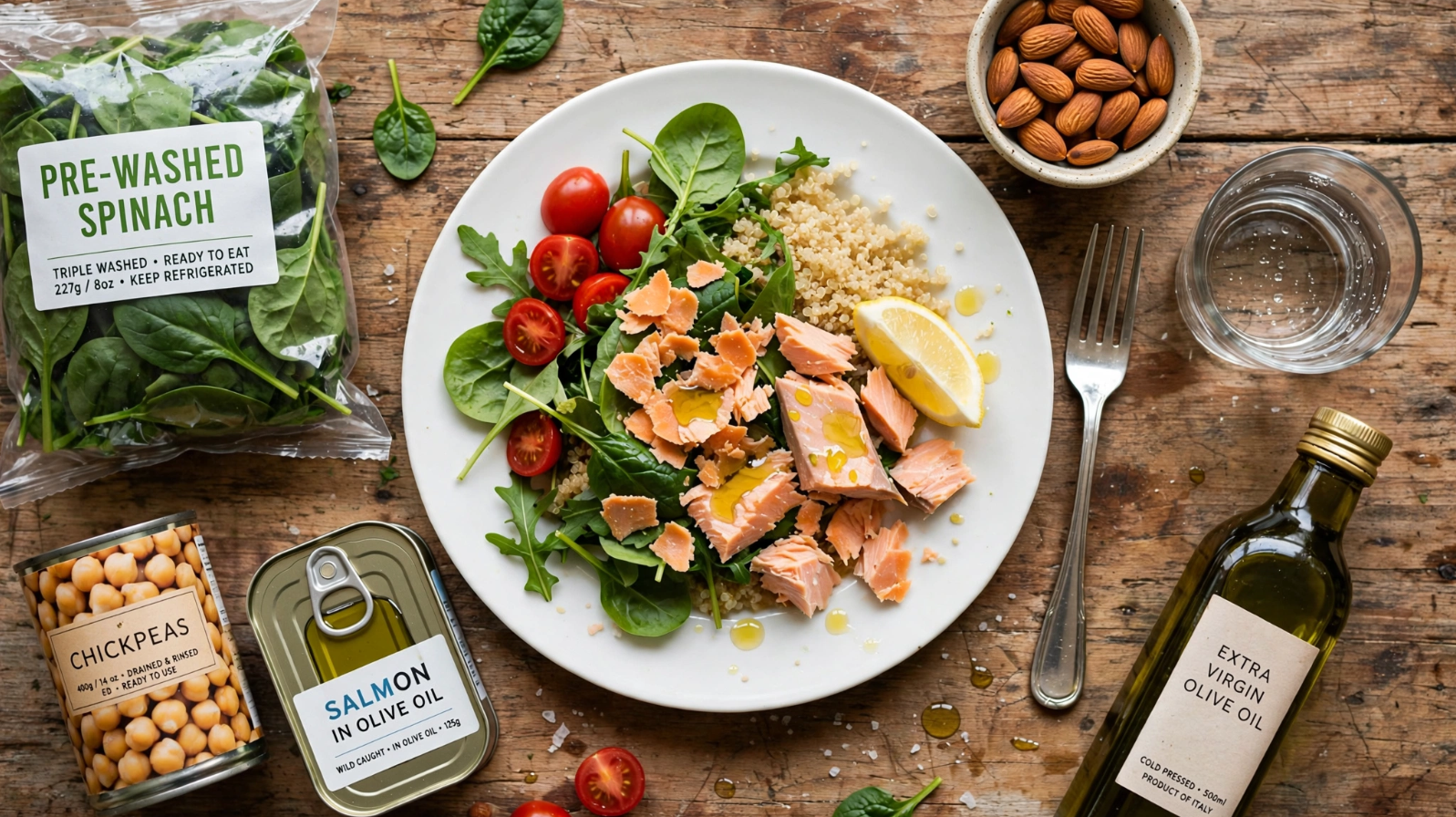
Visual Description: A warm, overhead flat-lay horizontal image on a rustic wooden table. At center, a simple white dinner plate beautifully arranged with the four-quadrant framework: a handful of vibrant pre-washed greens and cherry tomatoes (half the plate), a scoop of microwaveable quinoa (quarter), a piece of canned wild salmon drizzled with olive oil and lemon (quarter), and a final glistening drizzle of extra-virgin olive oil catching the light across the vegetables. Next to the plate, a small bowl of unsalted almonds, a fork, and a glass of water. In the corner of the frame, the key ingredients that made this meal in under 5 minutes: a can of chickpeas, a tin of salmon in olive oil, a bag of pre-washed spinach, and a bottle of extra-virgin olive oil with a simple handwritten label. The lighting is soft and natural, evoking a relaxed Mediterranean evening, but the scene is unmistakably an American kitchen. No chef’s knife, no cutting board, no elaborate prep. The mood is abundant, effortless, and attainable.
Read All Related Articles
- The Complete Guide to Heart Health: Beyond Omega-3s—CoQ10, Magnesium, Potassium, and Nitric Oxide Support After 40
- The Complete Guide to Habit Design After 40: Building Sustainable Health Routines and Tracking What Matters
- The 8 Health Metrics Every American Over 40 Should Track (And How to Do It Without Obsession)
- Habit Stacking for Busy Americans: A 10-Minute Morning Routine That Actually Sticks
- Sleep Tracking Demystified: How to Use Your Apple Watch/Oura Ring to Wake Up Refreshed
- Habit Design 101: Why You Fail (And the Tiny Fix That Changes Everything)
- From Couch to Consistent: The 30-Day ‘Exercise Snack’ Habit Plan
- The Mediterranean Diet Habit Blueprint (For Americans Who Hate Meal Prep)
- HRV Explained: Why It Matters and How to Improve It Without Chasing Numbers
- Whoop vs. Oura vs. Fitbit: Which Health Tracker Fits Your Lifestyle?
- How to Keep Your Health Habits Alive During BBQ & Travel Season
- 5-Minute Poolside/Patio Workouts (No Equipment, No Sweat)
- Half-Year Habit Audit: A Simple Framework to Review What’s Working
- Reader Stories: 3 Americans Who Transformed Their Health with One Tiny Habit