
Author: Vigor Forty Editorial Team
Medically Reviewed By: Editorial Review Board
Disclaimer: This article is for informational purposes only and is not a substitute for professional medical advice. Consult your physician before beginning any new exercise program. Read our full Medical Disclaimer.
📌 Key Takeaways
- “Exercise Snacks” Are Short, Scattered Bursts of Movement That Remove the Barriers of Time, Motivation, and Intimidation: Instead of a 45-minute gym session, you perform a few 2–5-minute “snacks” throughout your normal day. Research shows that these micro-doses accumulate into meaningful improvements in fitness, blood sugar control, and blood pressure—especially in previously sedentary adults.
- The 30-Day Plan Progresses From One Tiny Snack to a Sustainable Daily Rhythm: Week 1 starts with a single, embarrassingly easy 1-minute snack anchored to an existing habit. By Week 4, you’ll be doing three to four brief snacks totaling 15–20 minutes of movement daily, without a single gym visit or spandex outfit.
- Vigorous Intermittent Lifestyle Physical Activity (VILPA) Is a Scientifically Valid Shortcut: Emerging research shows that just 3–4 brief (1–2 minute) bursts of vigorous activity sprinkled into daily life—like fast stair climbing or brisk walking—reduce all-cause mortality and cardiovascular disease risk by 30–40% in non-exercisers.
- This Plan Doubles as a Habit-Design Masterclass: Every exercise snack is attached to a clear anchor, tracked with a simple Seinfeld-calendar X, and celebrated with a small internal acknowledgment. These elements lock in the movement habit before you ever attempt a “real” workout.
- After 30 Days, You’ll Have Built the Identity of a Person Who Moves Daily: The compounding effect of 30 unbroken days of tiny movement rewires your self-story. From that foundation, longer workouts, resistance training, or sports become a natural expansion, not a dreaded obligation.
Introduction: You Don’t Need a Gym Membership to Start Moving—You Need a Different Definition of Exercise
If the word “exercise” conjures images of packed gyms, complicated machines, sweating strangers, and a full hour carved out of your already stretched day, you’re not alone. For millions of Americans over 40, that definition is the single biggest barrier to consistent movement. The perceived effort, time cost, and psychological hurdle are so high that the behavior never launches—or it launches in a January fury and crashes by February.
But what if exercise looked like walking briskly to the mailbox and back? What if it was 20 bodyweight squats while your coffee brewed? What if it was a single flight of stairs taken with intention, twice a day? This is the world of exercise snacks—brief, purposeful bursts of movement woven into the existing fabric of your day. They require no special clothing, no equipment, no commute, and almost no time.
This article presents a 30-day plan that takes you from sedentary to consistently active using nothing but tiny movement snacks. You’ll learn the science that makes these micro-doses effective, see the exact weekly progression, learn how to customize snacks for your home, office, or travel life, and understand how to track your streak so the habit locks in permanently. You are not starting a fitness program. You are starting a movement habit so small and so natural that, by Day 30, you’ll look back and realize you’ve become someone who moves—without ever having forced a single workout.
Section 1: The Science of Exercise Snacks—Small Doses, Large Results
The traditional exercise prescription—150 minutes of moderate activity per week in bouts of at least 10 minutes—is effective but fails to account for human psychology and the midlife time crunch. A growing body of research validates a more flexible, bite-sized approach.
What the Research Shows:
- A 2022 study published in Nature Medicine analyzed accelerometer data from over 25,000 non-exercisers. Those who performed just three 1–2-minute bursts of vigorous intermittent lifestyle physical activity (VILPA) daily—like fast walking uphill or carrying groceries briskly—had a 38–40% lower risk of all-cause and cancer mortality, and a 48–49% lower risk of cardiovascular disease death, compared to those who did no such bursts. The more daily bursts, the greater the protection.
- A 2019 study in Applied Physiology, Nutrition, and Metabolism found that climbing three flights of stairs three times per day, separated by a few hours, improved cardiorespiratory fitness and reduced blood pressure in previously sedentary adults over six weeks.
- Exercise snacks improve post-meal blood glucose by activating muscle glucose transporters without insulin. A 2-minute walk or set of bodyweight squats after a meal significantly blunts the glucose spike, reducing the insulin demand. This is particularly relevant for the 40+ population creeping toward insulin resistance.
Why Snacks Work Where Workouts Fail:
- Low time barrier: A 2-minute snack fits between meetings, during commercials, or while waiting for the microwave.
- No recovery dread: Because the dose is small, there’s no soreness, no fatigue, and no psychological resistance the next time.
- High frequency: Doing something small multiple times per day reinforces the movement habit more effectively than one isolated gym visit every other day.
- Automatic scalability: Once the habit of snacking is locked in, expanding a 2-minute snack into a 5- or 10-minute session is trivial. The wall of resistance has already been dismantled.
Section 2: The 30-Day Exercise Snack Plan
This plan assumes you are starting from a relatively sedentary baseline. The goal is not peak fitness in 30 days; the goal is an unbroken chain of daily movement that rewires your identity. Every day includes one non-negotiable “anchor snack” and, as the weeks progress, additional optional snacks that you can scatter wherever they fit.
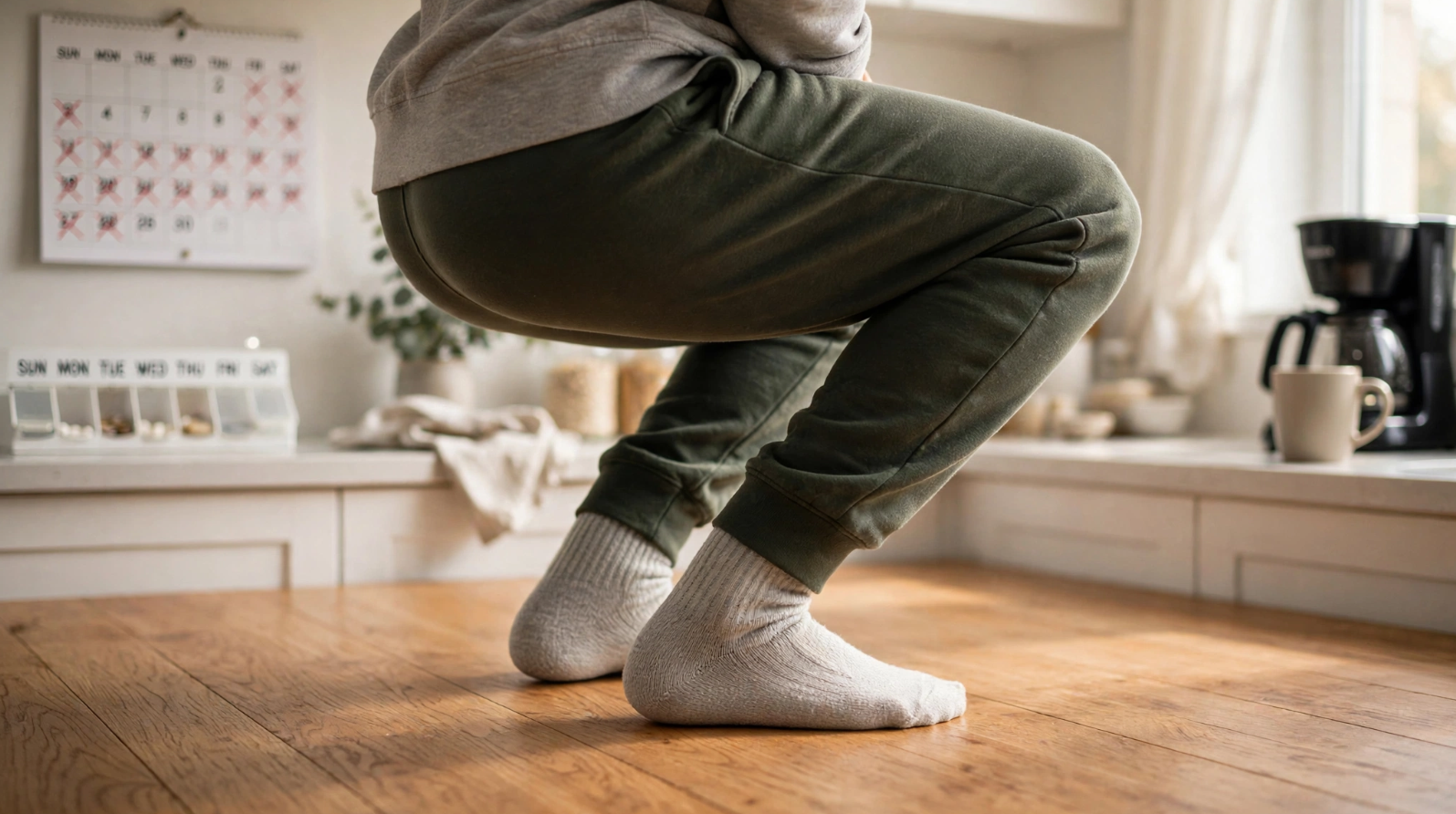
Tracking Tool: Hang a simple wall calendar or use a notebook page with 30 boxes. After completing your daily anchor snack, draw a red X. The chain is your primary motivator.
Week 1: The Anchor (One Snack Per Day)
This week is about installing the single most reliable movement cue in your life. You will perform exactly one exercise snack per day, attached to an existing, non-negotiable daily habit.
The Anchor Habit: Choose one of the following, or invent your own:
- After I pour my morning coffee, I will march in place for 1 minute.
- After I use the bathroom in the morning, I will do 10 bodyweight squats.
- After I close my laptop for lunch, I will walk briskly to the end of the block and back.
- After I park my car at home in the evening, I will do 5 countertop push-ups.
Duration: 1–2 minutes. That’s it. The movement should feel easy, not breathless. You’re not training; you’re installing the habit software.
Goal for Week 1: 7 consecutive days of the anchor snack. Mark the red X daily. If you miss a day, restart the count the next day with zero self-blame—but the objective is a clean 7-day chain.
Week 2: Add One Contextual Snack
The anchor is now semi-automatic. This week, you add a second daily snack tied to a different part of your day, building a second habit strand.
Choose a Second Snack Based on Your Lifestyle:
- Office Worker: After I hang up from a phone call, I will stand up and do 15 seconds of high knees (or seated leg lifts if privacy is limited).
- Stay-at-Home Parent: After I put the kids down for a nap / quiet time, I will do a 2-minute gentle yoga flow or stretching sequence.
- Remote Worker: After I finish a work block (set a timer for 90 minutes), I will step outside and walk around the house once.
- Evening Relaxer: During the first commercial break of my evening show, I will stand up and do 5 couch squats (stand up and sit down from the couch, 5 times, controlled).
Duration: Still 1–3 minutes. Two snacks total per day. Continue marking the calendar X when both are done (one X per day; you’re tracking the chain, not the count).
Week 3: Stack Intensity (Still Tiny)
You now have two reliable daily movement anchors. This week, you gently increase the effort of one of your snacks, making it a brief “vigorous” burst—the VILPA effect.
Intensity Upgrade Options:
- Instead of marching in place, do fast high knees for 60 seconds.
- Instead of walking to the end of the block, power-walk that segment, pumping your arms.
- Instead of 10 bodyweight squats, do 20 squats at a faster pace.
- Add a flight of stairs if available: After I arrive at work, I will climb the stairs to the second floor, walk back down, then take the elevator the rest of the way.
- After your evening snack, do 10 jumping jacks or 1 minute of fast-paced step-ups on the bottom stair.
Important: Only one snack per day gets the intensity bump. The other remains easy and restorative. You are introducing the idea that movement can get your heart rate up, but you’re not exhausting yourself. The X on the calendar continues.
Week 4: Three Snacks, Automatic Rhythm
By now, two movement snacks feel like a natural part of your day. This week, you add a third snack, aiming for a morning, midday, and afternoon/evening rhythm. You are now accumulating 10–20 minutes of purposeful movement daily, all in bite-sized pieces.
Sample Full Day Structure:
- Morning Anchor (2 min): Coffee brewing → 20 bodyweight squats + 10 wall push-ups.
- Midday Snack (2–3 min): Before eating lunch → brisk 3-minute walk around the building or block.
- Evening Snack (2–3 min): After clearing the dinner table → gentle stretching, foam rolling, or a set of glute bridges while watching TV.
Optional “Grease the Groove” Snacks: Throughout the day, every time you pass a certain doorway, do 1 push-up or 1 pull-up (if you have a bar). This is classic habit-stacking for strength. The volume is so low it generates zero fatigue, but over 30 days, the total reps are substantial.
End of Week 4 Reflection: Count the red X’s. You have 30 days of unbroken movement. Look at the person you’ve become: someone who moves without a gym, without a block of time, without dread. This identity is now yours. From here, you can add a longer walk on weekends, try a fitness class, or simply maintain the snack rhythm indefinitely—it is, by itself, sufficient to dramatically improve health markers.
Section 3: Exercise Snack Library—Mix and Match Forever
Use this list to keep your snacks varied and targeted to different benefits.
Cardiovascular Snacks (Heart Rate Raisers):
- Fast stair climbing for 1–2 minutes.
- Jumping jacks or seal jacks for 60 seconds.
- Brisk walking with arm pumps for 3 minutes.
- Dancing to one upbeat song in the kitchen.
- High-knee marching for 2 minutes.
Strength & Bone Density Snacks:
- Bodyweight squats (add a hold at the bottom for glute activation).
- Countertop or wall push-ups.
- Lunges across the living room (5 per leg).
- Glute bridges on the floor (15 reps).
- Calf raises on a step edge (20 reps, slow and controlled).
Mobility & Recovery Snacks:
- Neck rolls, shoulder shrugs, and wrist circles (2 minutes).
- Standing torso twists.
- Hip flexor stretch (hold onto a chair for balance).
- Cat-cow stretches on the floor.
- Seated forward fold while watching TV.
Outdoor/Nature Snacks (For Mental Health Bonus):
- Walk to the farthest tree and back.
- Carry a load (groceries, a bag of soil, a child) for 100 yards.
- Step outside and take 10 deep breaths while looking at the sky, then walk around the yard once.
Section 4: How Exercise Snacks Stack With Your VigorForty Supplement & Habit System
The exercise snack plan integrates seamlessly with the other tools you’re already using.
With the Morning Habit Stack:
Replace the “brief movement” step in your 10-minute morning stack with your anchor exercise snack. The movement component of the stack now becomes your daily non-negotiable. You are already doing it; now you’re naming it.
With Supplement Timing:
Your post-meal snack (a 2-minute walk or set of air squats) directly enhances the metabolic benefits of your supplements. For example, walking after a meal that includes omega-3s and CoQ10 improves blood flow and nutrient delivery, while simultaneously lowering the post-meal glucose surge. This synergy makes both the snack and the supplement more effective.
With Health Metric Tracking:
Watch your resting heart rate trend downward and your step count climb over the 30 days. As you enter Week 3 and 4, you may notice your morning blood pressure readings improving. These objective feedback signals reinforce the habit and build momentum.
Section 5: FAQ—Your Exercise Snack Questions
Q: Can 2-minute snacks really replace a full workout?
A: They can replace the foundation of movement, especially if you are currently sedentary. A consistent pattern of multiple daily snacks can cover your aerobic base, improve insulin sensitivity, and maintain basic strength. For optimal health, you may eventually want to add longer endurance sessions (a weekend hike) and dedicated resistance training. But exercise snacks build the habit and the baseline fitness that make those additions sustainable. Start here; the gym is optional, not mandatory.
Q: I’m over 60 and have joint pain. Are exercise snacks safe?
A: Yes, and they are often safer than a single intense workout. Small, frequent doses of movement lubricate joints without overloading them. Choose low-impact snacks: seated leg lifts, gentle standing marches, chair squats, wall push-ups, and slow walking. Avoid high-impact moves like jumping. If you have a specific condition like severe arthritis or recent joint replacement, consult your physician or physical therapist for personalized modifications.
Q: I’m so sedentary that 2 minutes of marching feels hard. Is that normal?
A: Yes, and that’s a crucial data point. If 2 minutes of marching elevates your heart rate and makes you feel slightly winded, it means your cardiovascular system needs exactly that dose. Start with 30 seconds. Or march during just one TV commercial break. The dose must be calibrated to your current ability. The beauty of the snack approach is that it meets you exactly where you are. In three weeks, those 30 seconds will feel easy, and you’ll naturally extend to 60 seconds without a push.
Q: What if I forget to do my snack?
A: Attach it to a stronger anchor. If you forget the coffee-triggered squat, maybe you didn’t actually pour the coffee mindfully. Tie the snack to something truly unavoidable: flushing the toilet, receiving a text notification, the sound of your garage door opening, the moment you stand up from your desk. Set a phone alarm for midday if necessary. The first week is about discovering the ironclad cue. Experiment until you find one that works.
Q: Can I do all my snacks at once?
A: Not in the spirit of this plan, but it’s better than not moving. The physiological advantage of exercise snacks is the distributed nature—multiple spikes in muscle activation and heart rate throughout the day, breaking up sedentary time. A single 10-minute block is still beneficial, but three 3-minute snacks spread out are superior for blood sugar control and habit frequency. Once the daily chain is secure, it’s fine to occasionally consolidate if your schedule demands it.
The VigorForty Take
The fitness industry built its empire on the belief that exercise must be long, hard, and painful to count. That belief has left a nation of sedentary, discouraged, and injured midlife adults who feel that movement is something for other people—younger, fitter, more disciplined people. The science of exercise snacks demolishes that myth. Small, frequent, almost invisible bursts of movement, woven into the fabric of your real, messy American life, are not just sufficient—they are, for many people, superior. Superior for adherence, superior for metabolic health, superior for building an unshakable identity as a mover.
This 30-day plan is your on-ramp. You don’t need new clothes, new shoes, or a new schedule. You need to define your anchor, start with one laughably small snack, and mark an X on a calendar every day for a month. The first few days will feel trivial; that’s the design. By Day 30, you will have moved daily for a month, likely lowered your blood pressure, improved your post-meal blood sugar, and installed a habit that will serve your heart, brain, and bones for the rest of your life. From the couch to consistency—one tiny snack at a time. Your body is ready. Your calendar is waiting. The next red X starts now.
Read All Related Articles
- The Complete Guide to Heart Health: Beyond Omega-3s—CoQ10, Magnesium, Potassium, and Nitric Oxide Support After 40
- The Complete Guide to Habit Design After 40: Building Sustainable Health Routines and Tracking What Matters
- The 8 Health Metrics Every American Over 40 Should Track (And How to Do It Without Obsession)
- Habit Stacking for Busy Americans: A 10-Minute Morning Routine That Actually Sticks
- Sleep Tracking Demystified: How to Use Your Apple Watch/Oura Ring to Wake Up Refreshed
- Habit Design 101: Why You Fail (And the Tiny Fix That Changes Everything)
- From Couch to Consistent: The 30-Day ‘Exercise Snack’ Habit Plan
- The Mediterranean Diet Habit Blueprint (For Americans Who Hate Meal Prep)
- HRV Explained: Why It Matters and How to Improve It Without Chasing Numbers
- Whoop vs. Oura vs. Fitbit: Which Health Tracker Fits Your Lifestyle?
- How to Keep Your Health Habits Alive During BBQ & Travel Season
- 5-Minute Poolside/Patio Workouts (No Equipment, No Sweat)
- Half-Year Habit Audit: A Simple Framework to Review What’s Working
- Reader Stories: 3 Americans Who Transformed Their Health with One Tiny Habit