
As the years pass, one of the most common complaints we hear is a gradual, stubborn decline in daily energy. We blame our busy careers, our family schedules, or simply “getting older.” We drink more coffee, white-knuckle our way through afternoon slumps, and accept that waking up with boundless, youthful vitality is a thing of the past.
But aging isn’t a macroscopic problem; it’s a cellular one.
The true differentiator between someone who feels sluggish at 45 and someone who possesses vibrant, unstoppable stamina is the health of their mitochondria. If you want to unlock true longevity and reliable, all-day focus, you have to stop chasing temporary stimulants and start optimizing your bioenergetics.
Read Related Articles
- The 3-2-1 Rule: How to Optimize Your Circadian Rhythm for Deep, Restorative Sleep
- Beyond Sleep Hygiene: Why Your Bedroom Is Keeping You Tired (And How to Fix It)
- Calm the System, Sleep Follows: Breaking the Cycle of High-Stress Biohacking
- Recharging the Cellular Battery: The Deep Science of Mitochondrial Health and Mid-Life Energy
- Beyond Calorie Counting: Mastering Metabolic Flexibility to Erase Mid-Day Crashes and Stubborn Fat
- Protecting the Master Processor: Reversing Brain Fog and Building Lifelong Cognitive Reserve
- Reclaiming the Balance: Healing the “Cortisol Steal” and Building Elite Stress Resilience
1. The Cellular Engine: What Are Mitochondria?
You might vaguely remember from high school biology that the mitochondria are the “powerhouses of the cell.” Inside nearly every cell in your body, these tiny organelles take the food you eat and the oxygen you breathe and convert them into Adenosine Triphosphate (ATP). ATP is the fundamental energy currency of human life; every heartbeat, muscle contraction, and thought requires it.
When we are young, our mitochondria are highly efficient, abundant, and dynamic. However, as we age, two things happen:
- Mitochondrial Decay: The remaining mitochondria accumulate structural damage from free radicals, making them less efficient at generating ATP. They become “leaky,” producing more cellular waste and inflammation than actual energy.
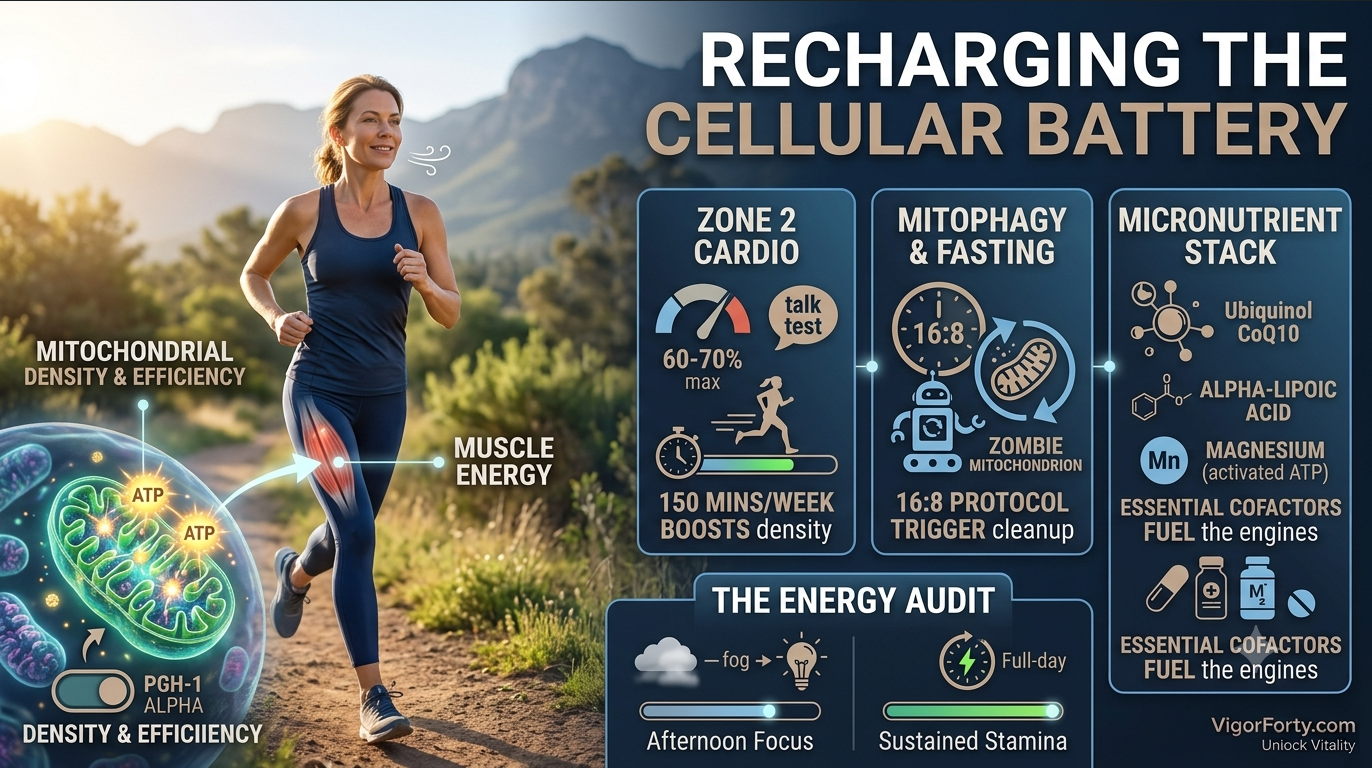
- Loss of Density: We lose up to 50% of our mitochondrial capacity between our 20s and our 50s if we live a sedentary lifestyle.
This drop in ATP production is the root cause of systemic fatigue, brain fog, and accelerated aging. Fortunately, your body possesses an incredible mechanism called mitochondrial biogenesis—the literal creation of brand-new, young cellular power plants. Here is exactly how to force your biology to build them.
2. Zone 2 Cardio: The Ultimate Medication for Mitochondrial Density
When people think of cardio, they usually think of high-intensity, exhausting workouts like HIIT classes or sprinting until they drop. While high-intensity exercise has its place, it does not prioritize mitochondrial health. To build new cellular engines, you need Zone 2 Cardiovascular Training.
What is Zone 2?
Zone 2 is low-intensity, steady-state exercise performed at a pace where you can maintain a conversation but it would be slightly uncomfortable to do so. In this metabolic state, your body relies almost exclusively on fat oxidation within the mitochondria to produce ATP, rather than burning glucose in the cytosol.
The Deep Benefit
Zone 2 training puts a distinct, prolonged physiological stress on your existing mitochondria, forcing them to become more efficient. More importantly, it activates a master genetic switch called PGC-1alpha, which triggers mitochondrial biogenesis.
- The Blueprint: Aim for 150 minutes per week of Zone 2 training (broken into 30 to 45-minute sessions). This can be a brisk incline walk, steady cycling, or using an elliptical. Keep your heart rate roughly between 60%–70% of your maximum, or use the “talk test”—if you can’t speak a full sentence without taking a breath, you are working too hard.
3. Mitophagy: Clearing Out the “Zombie” Power Plants
Just as important as creating new mitochondria is destroying and recycling the old, broken ones. This cellular recycling process is called mitophagy. When damaged mitochondria are allowed to linger, they emit high amounts of oxidative stress, damaging surrounding healthy cells and contributing to chronic low-grade inflammation.
To trigger mitophagy and cleanse your cellular ecosystem, you need to leverage strategic periods of metabolic deprivation:
Intermittent Fasting (Time-Restricted Eating)
When your body is constantly digesting food, it remains in an anabolic (growth) state, driven by insulin and mTOR. When you transition into a fasted state, your body shifts into a catabolic (cleanup) state. Sensing a lack of incoming nutrients, it begins scanning cells for damaged components—specifically targeting worn-out mitochondria to break down for fuel.
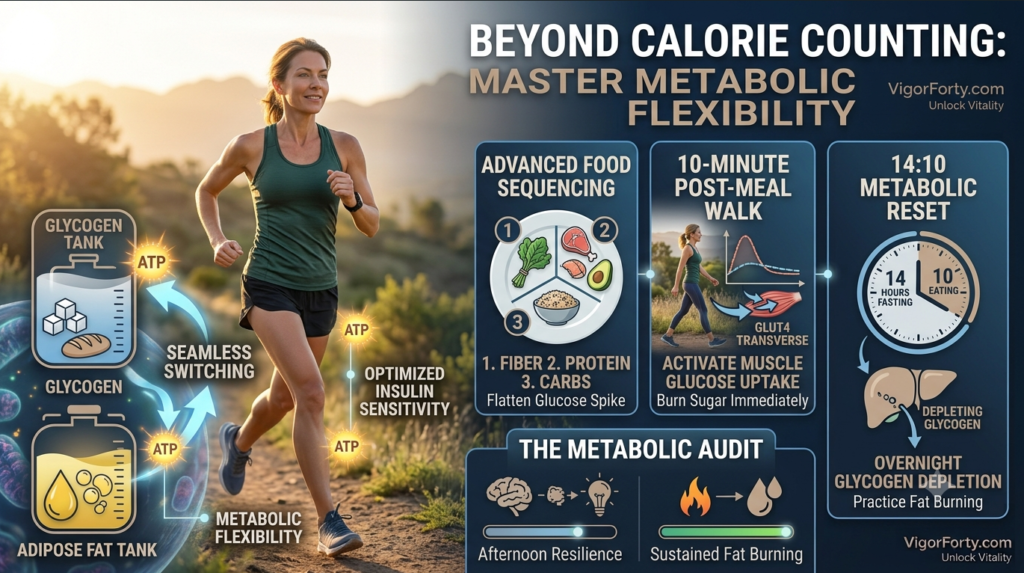
- The Action: Implement a 14:10 or 16:8 fasting protocol 3 to 4 days a week. Restricting your food intake to an 8-to-10-hour window allows your cellular machinery time to focus on house cleaning rather than constant digestion.
4. The Micronutrient Stack for Cellular Power
While movement and fasting provide the physical architecture for mitochondrial health, your cellular engines require specific cofactors to efficiently run the electron transport chain (the process that creates ATP).
If you want to optimize your bioenergetic output, ensure your nutrition or supplement stack includes these foundational elements:
- Coenzyme Q10 (CoQ10): A critical antioxidant that acts as an electron shuttle within the mitochondrial membrane. Without it, ATP production stalls. Look for the highly bioavailable form known as Ubiquinol.
- Alpha-Lipoic Acid (ALA): A powerful antioxidant that works synergistically with CoQ10 to neutralize the free radicals generated during energy production, protecting your mitochondrial DNA.
- Magnesium: ATP must bind to a magnesium molecule to become biologically active (Mg–ATP). If you are deficient in magnesium—as over half of the US population is—your body cannot effectively deploy the energy your mitochondria manage to create.
The VigorForty Energy Audit
Unlocking sustainable, life-long energy isn’t about drinking another energy drink or masking your fatigue with synthetic stimulants. It’s about respecting your biology at a cellular level.
This week, audit your routine. Can you swap one high-stress, exhausting workout for a 45-minute steady Zone 2 walk? Can you introduce a magnesium supplement to active your cellular currency? Small, consistent inputs give your mitochondria the exact signals they need to multiply, adapt, and charge your internal battery to 100%.
Do you struggle with afternoon energy crashes? Have you ever tracked your workouts to see if you’re actually training in Zone 2? Let’s talk about it in the comments below! Don’t forget to subscribe to the VigorForty newsletter for more deep-dive, science-backed longevity strategies.