
In the health and wellness space, we are living through an era of extreme optimization. Millions of Americans check their sleep data every single morning, scanning metrics from smart rings, watches, or under-mattress trackers. We look at our deep sleep graphs, evaluate our REM percentages, and strive for the coveted “perfect sleep score”.
But a bizarre paradox is playing out across the United States. While awareness of sleep tracking has surged, nearly half of adults report that they still struggle to fall asleep or wake up feeling completely exhausted.
In the medical community, this has given rise to a new term: orthosomnia—the obsessive pursuit of perfect sleep that ironically causes enough performance anxiety to keep you awake.
If you’re stacking supplements, setting rigid bedroom rules, and still tossing and turning with a racing mind, you don’t have a tracking problem. You have a nervous system problem. Sleep isn’t an exam you can study for or force your way through. It is a natural biological function that only occurs when your brain receives a single, vital cue: safety.
Read Related Articles
- The 3-2-1 Rule: How to Optimize Your Circadian Rhythm for Deep, Restorative Sleep
- Beyond Sleep Hygiene: Why Your Bedroom Is Keeping You Tired (And How to Fix It)
- Calm the System, Sleep Follows: Breaking the Cycle of High-Stress Biohacking
- Recharging the Cellular Battery: The Deep Science of Mitochondrial Health and Mid-Life Energy
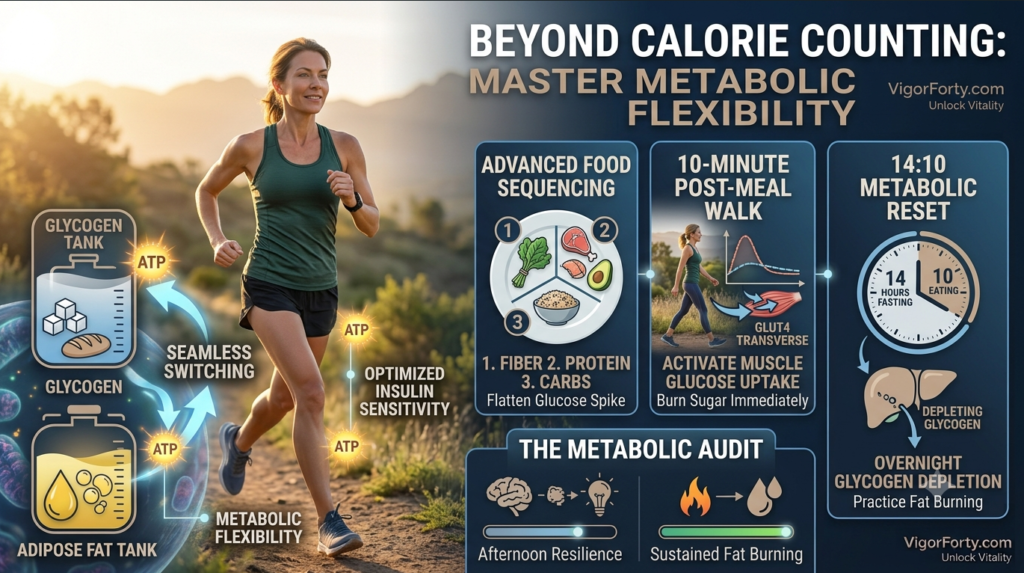
- Beyond Calorie Counting: Mastering Metabolic Flexibility to Erase Mid-Day Crashes and Stubborn Fat
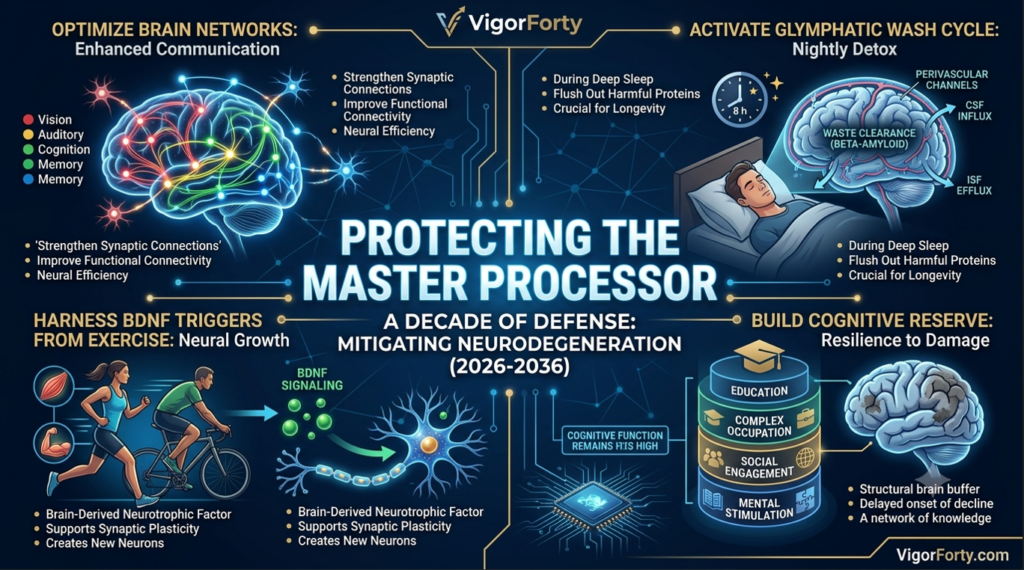
- Protecting the Master Processor: Reversing Brain Fog and Building Lifelong Cognitive Reserve
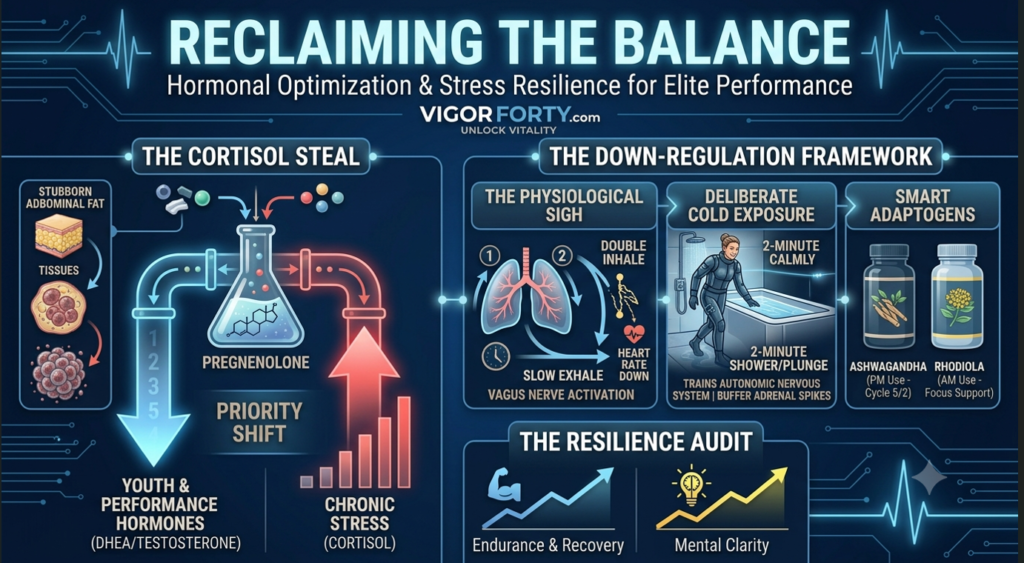
- Reclaiming the Balance: Healing the “Cortisol Steal” and Building Elite Stress Resilience
1. The Real Reason Your Mind Races at 11:00 PM
When you crawl into bed with your mind still spinning over tomorrow’s presentations, mortgage payments, or your unread email inbox, your sympathetic nervous system stays locked in the “fight-or-flight” mode.
Your brain doesn’t know the difference between a looming work deadline and a physical predator outside your cave. In both cases, it floods your system with cortisol and norepinephrine. This elevates your heart rate and prevents your brainwaves from slowing down.
No amount of blackout curtains or expensive bedding will override a nervous system that feels actively threatened. To sleep, you must intentionally signal your parasympathetic nervous system—the “rest-and-digest” mechanism—to take the wheel.
2. Three Science-Backed Strategies to Drop “Sleep Effort”
To transition from high alertness to deep rest, try shifting away from “forcing” sleep and focus on calming your biology instead.
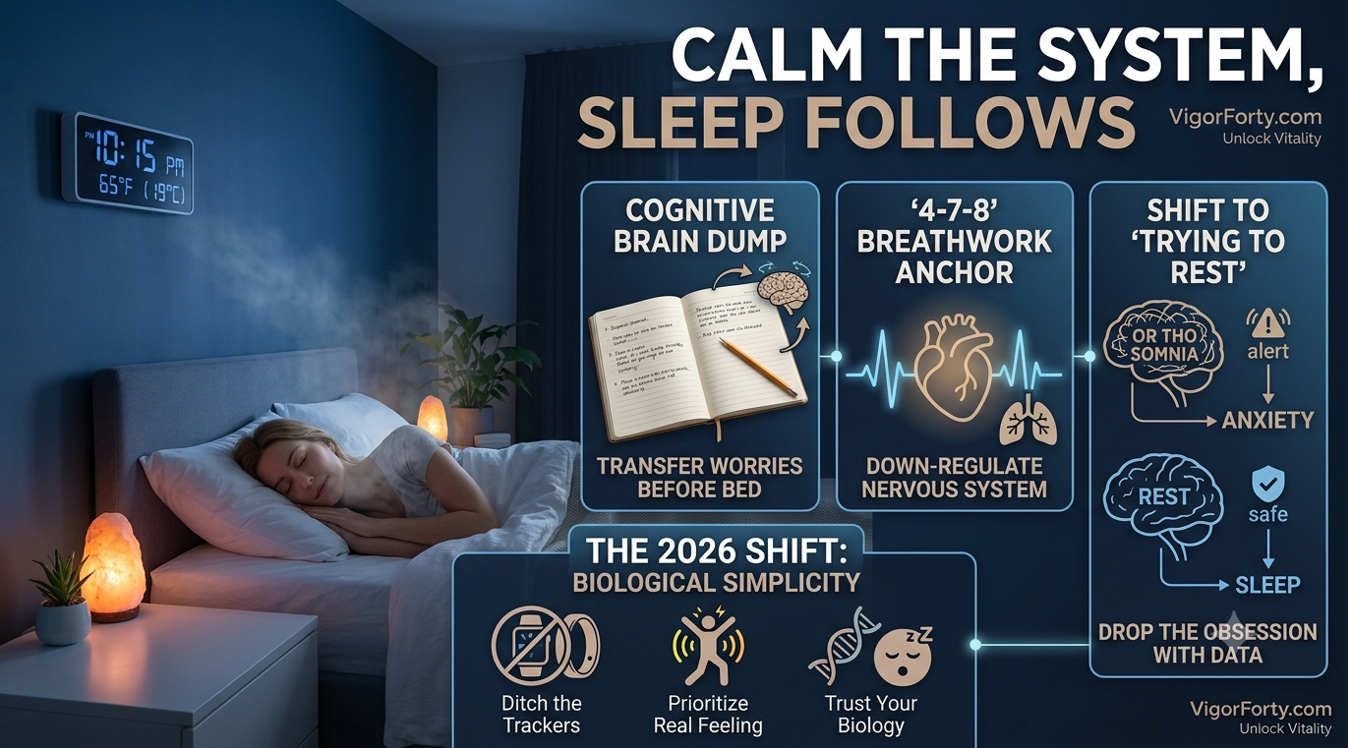
The Cognitive Brain Dump (Journaling)
One of the main reasons the mind loops at night is the fear of forgetting something important tomorrow. The brain treats unresolved tasks as open loops that must be monitored.
- The Action: Keep a physical notepad on your nightstand. Before turning the lights off, spend three minutes writing down everything you need to do tomorrow, along with any lingering anxieties. By physically transferring these thoughts out of your head, you signal to your brain that the information is safe and can be safely ignored until morning.
The “4-7-8” Breathwork Anchor
Controlled breathwork is the fastest physiological hack to lower your heart rate and down-regulate an overstimulated nervous system.
- The Action: Inhale through your nose quietly for 4 seconds, hold your breath for a count of 7 seconds, and exhale completely through your mouth making a “whoosh” sound for a full 8 seconds. Repeat this loop four times. The prolonged, slow exhalation mimics the breathing patterns of deep relaxation, tricking your vagus nerve into lowering your blood pressure and halting cortisol production.
Shift from “Trying to Sleep” to “Trying to Rest”
When you lie awake worrying about how tired you will be tomorrow, you increase sleep pressure anxiety, which further alerts the brain.
- The Action: Shift your mental objective. Tell yourself: “It doesn’t matter if I sleep right now; my only goal is to lie here comfortably and let my body rest.” Paradoxically, removing the performance pressure cools down the brain’s threat-detection network, allowing you to slip naturally into unconsciousness.
3. The 2026 Shift: Simplifying Over Optimizing
True sleep optimization is moving away from aggressive “sleepmaxxing” routines involving a dozen pills, mouth tape, and complex devices. Instead, long-term health and vitality rely on a sustainable lifestyle return to biological simplicity.
Rather than obsessing over the data points on your phone when you wake up, start checking in with your actual physical symptoms throughout the afternoon:
- How is your sustained focus at 2:00 PM?
- Are you irritable or calm when dealing with stress?
- Is your physical recovery on track?
Your daytime function and mental mood are the truest indicators of your sleep health—not a digital score.
The VigorForty Takeaway
Your body already knows exactly how to sleep; it has been doing it since the day you were born. The key to reclaiming deep, restorative rest isn’t about doing more—it’s about removing the psychological and environmental obstacles that stand in biology’s way.
Tonight, let go of the sleep trackers, close down the thoughts, drop your shoulders, and give your nervous system permission to feel safe.
Do you use a wearable sleep tracker? Have you ever noticed it causing you more stress than clarity? Drop your thoughts in the comments below, and don’t forget to subscribe to VigorForty for actionable, sustainable health insights.