

We’ve all been there. You drag yourself out of bed after what felt like a full night’s sleep, immediately reaching for a Starbucks or hitting the Keurig just to survive your morning Zoom calls. By 3:00 PM, the brain fog rolls in, and by 10:00 PM, you’re suddenly wide awake, staring at your ceiling or mindlessly scrolling through your phone.
If you are waking up tired despite spending eight hours in bed, you don’t have a time problem—you have a circadian rhythm problem.
True sleep optimization isn’t just about the quantity of hours you spend under the sheets. It’s about aligning your body’s internal master clock with the natural world. If you want to wake up with sustainable energy, sharp focus, and a vibrant body, it’s time to implement the 3-2-1 Rule and master your circadian biology.
Read Related Articles
- The 3-2-1 Rule: How to Optimize Your Circadian Rhythm for Deep, Restorative Sleep
- Beyond Sleep Hygiene: Why Your Bedroom Is Keeping You Tired (And How to Fix It)
- Calm the System, Sleep Follows: Breaking the Cycle of High-Stress Biohacking
- Recharging the Cellular Battery: The Deep Science of Mitochondrial Health and Mid-Life Energy
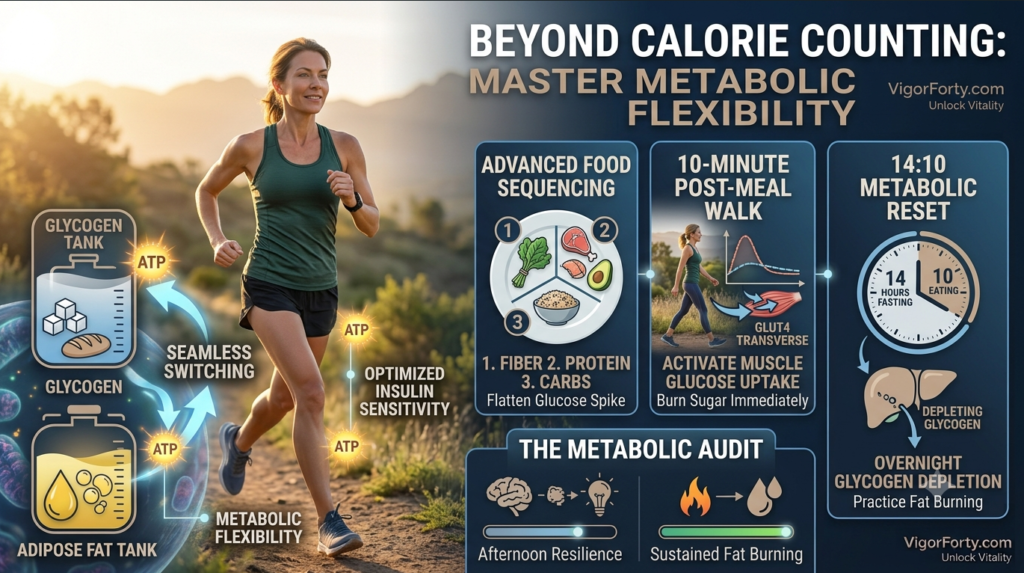
- Beyond Calorie Counting: Mastering Metabolic Flexibility to Erase Mid-Day Crashes and Stubborn Fat
- Protecting the Master Processor: Reversing Brain Fog and Building Lifelong Cognitive Reserve
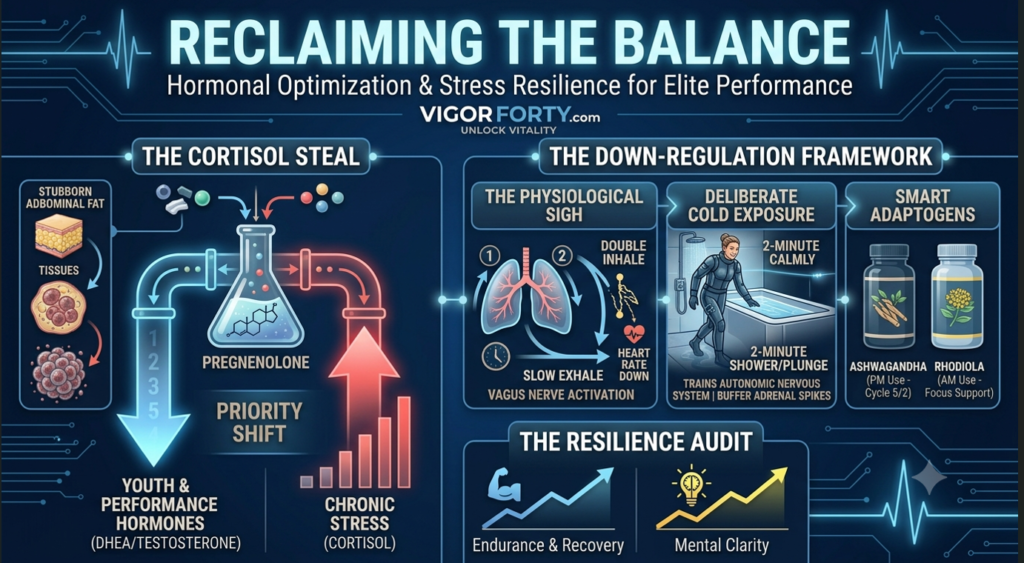
- Reclaiming the Balance: Healing the “Cortisol Steal” and Building Elite Stress Resilience
What is the Circadian Rhythm? (And Why It’s Ruining Your Mornings)
Deep inside your brain sits a master clock called the suprachiasmatic nucleus. Think of it as your body’s internal project manager. It controls your 24-hour sleep-wake cycle by signaling when to release cortisol (the hormone that wakes you up) and melatonin (the hormone that puts you to sleep).
In our modern, always-connected world, we constantly confuse this internal clock. Artificial bright lights, late-night snacking, and checking work emails in bed send a false signal to your brain that it’s high noon when it’s actually midnight.
The result? You completely miss out on high-quality deep sleep and REM sleep—the critical phases where your body repairs muscles, flushes out toxins, and consolidates memories.
Fortunately, resetting your master clock is incredibly simple when you control two variables: Light and Timing.
The Blueprint: The 3-2-1 Evening Routine
To transition your body from a chaotic, high-stress workday into deep, restorative sleep, you need an off-ramp. The 3-2-1 Rule is a highly effective, easy-to-remember countdown to protect your evening peace and optimize your sleep quality.
3 Hours Before Bed: No More Heavy Food or Alcohol
Your body cannot digest a heavy meal and efficiently enter deep sleep at the same time. Eating a late dinner forces your cardiovascular system to pump blood to your stomach rather than focusing on cellular repair.
Furthermore, that evening glass of wine or nightcap might make you feel drowsy, but alcohol is a sleep destroyer. It acts as a sedative, fragmenting your sleep architecture and virtually wiping out your REM cycles.
- The Goal: Finish your last meal or alcoholic beverage at least three hours before your target bedtime. If you need a snack, opt for something tiny and light, like a handful of walnuts.
2 Hours Before Bed: Close the Laptop and Stop Working
In a hustle-centric culture, it’s tempting to squeeze in “just one more email” right before bed. However, keeping your brain in a high-stress, problem-solving state keeps your cortisol levels spiked.
- The Goal: Establish a firm boundary between your professional and personal life. Shut down your work laptop, turn off Slack notifications, and let your mind coast. Use this time for light stretching, reading fiction, or catching up with family.
1 Hour Before Bed: Ban All Screens and Artificial Blue Light
This is the most critical step. The blue light emitted by iPhones, TVs, and tablets trick your brain into thinking it is still daytime, instantly halting the production of melatonin.
- The Goal: Turn off major screens 60 minutes before bed. Flip off harsh overhead fluorescent lights and switch to warm, dim lamps. If you absolutely must look at a screen, use blue-light-blocking glasses, but your best bet is picking up a physical book.
Two Secret Weapons to Anchor Your Biology
The 3-2-1 rule prepares you for bed, but to truly optimize your circadian rhythm, you need to bookend your day with two non-negotiable habits.
1. View Immediate Morning Sunlight
The timer for tonight’s sleep actually starts the moment you wake up. Within 30 to 60 minutes of waking, step outside onto your porch or balcony and look toward the sun (not directly at it) for 10 to 15 minutes.
Why it works: This blast of natural light triggers an immediate, healthy spike in cortisol that wakes you up instantly and tells your brain: “The clock has started. Release melatonin in 16 hours.” Sitting by a window does not work; window glass filters out the specific light wavelengths needed to stimulate your eyes.
2. Cool Down Your Sanctuary
Your core body temperature must drop by about 2°F (or ~1°C) to initiate sleep. If your bedroom is too warm, your body will toss and turn to try and regulate its temperature.
- The Goal: Set your thermostat to a cool 65°F to 68°F (18°C to 20°C). It might feel chilly at first, but it mimics the natural temperature drop of the earth after sunset, signaling to your biology that it is safe to sleep.
The VigorForty Challenge
Optimizing your sleep isn’t about being perfect; it’s about creating sustainable habits that give you your edge back.
This week, pick just one element of the 3-2-1 rule to implement. Whether it’s cutting off the late-night snacking or swapping your phone for a paperback book an hour before bed, your body will thank you with boundless energy, sharper focus, and a renewed sense of vigor.
What is the biggest thing keeping you awake at night? Let us know in the comments below, and don’t forget to subscribe to the VigorForty newsletter for weekly, science-backed wellness tips!