Author Box
Author: Vigor Forty Editorial Team
Medically Reviewed By: Editorial Review Board
Last Updated: August 23, 2026
Medical Disclaimer
Disclaimer: This article is for informational purposes only and is not a substitute for professional medical advice, diagnosis, or treatment. Always seek the advice of your physician or other qualified health provider with any questions you may have regarding a medical condition. Consult your physician before beginning a new exercise, diet, or supplement program, especially if you have an underlying health condition or are immunocompromised. Read our full Medical Disclaimer at vigorforty.com/disclaimer.
Irregular Periods in Teenage Girls: When Is It Normal and When to Worry?
Introduction
Your daughter had her first period six months ago. You both exhaled, thinking the hardest part was over. Then came the waiting—and the unpredictability. One month it arrives on day 28. The next, it skips entirely. Then it shows up after 40 days, heavier than expected, and lingers for a week. Is this normal? Or is something wrong?
For mothers over 40, this uncertainty can feel deeply familiar. Many of us are now experiencing our own irregular cycles as we approach perimenopause. The same unpredictability we once navigated as teenagers is now returning in midlife. This shared experience, though decades apart, can actually build empathy between mother and daughter.
This guide explains why teenage periods are often irregular, what patterns are expected, when irregularity is a red flag, and how to support your daughter through the ups and downs of her maturing cycle.
📌 Key Takeaways
- Irregularity Is the Norm Early On: For the first 1 to 2 years after menarche, irregular cycles are expected because the hormonal system is still maturing.
- What “Irregular” Means: Cycles shorter than 21 days, longer than 45 days, or skipped months are common in the first year but should normalize over time.
- Anovulatory Cycles: Many early periods occur without ovulation, which is a primary reason for unpredictability.
- Red Flags: Bleeding that soaks a pad in less than 1–2 hours, periods lasting longer than 7 days, or no period for more than 90 days after the first year warrant evaluation.
- Lifestyle Matters: Stress, extreme exercise, poor nutrition, and significant weight changes can all disrupt cycles.
- Track It: A simple period calendar or app helps distinguish normal variation from patterns that need medical attention.
Understanding the Teenage Menstrual Cycle
To understand irregular periods, we must first understand what a “regular” period actually is.
A menstrual cycle is counted from the first day of one period to the first day of the next. In adult women, a typical cycle ranges from 21 to 35 days, with bleeding lasting 2 to 7 days. But teenagers are not small adults. Their hormonal systems are still learning to communicate.
The brain’s hypothalamus, the pituitary gland, and the ovaries—collectively called the HPO axis—must coordinate a delicate dance of hormones. In the first months and years after menarche, this system is immature. The result is often irregular, unpredictable cycles [1].
Key fact: In the first year after menarche, up to 50% of cycles are anovulatory—meaning the ovaries do not release an egg. Without ovulation, the normal hormonal feedback loop is disrupted, leading to skipped periods, long gaps, or unpredictable bleeding [2].
What Is Considered “Normal” Irregularity?
It helps to have a framework for what is typical during different phases of adolescence.
| Time Since First Period | Expected Cycle Pattern | Notes |
|---|---|---|
| First 6 months | Highly variable; cycles may be 20–50+ days apart | Skipped months are common; flow may be light or heavy |
| 6 months to 1 year | Cycles usually 21–45 days apart | Still irregular but should show some pattern |
| 1 to 2 years | Cycles gradually become more predictable | Most girls establish a “normal” range |
| After 2 years | Cycles should be 21–45 days apart for teens | If cycles are consistently outside this range, evaluate |
| After 3 years | Adult-like pattern usually emerges (21–35 days) | Persistent irregularity needs medical review |
Adapted from American College of Obstetricians and Gynecologists guidelines [3].
Important: Teenage cycles are allowed to be longer than adult cycles. A cycle of 45 days in a 14-year-old may be normal, whereas in a 30-year-old it would be considered irregular.
Causes of Irregular Periods in Teens
Several factors contribute to irregular cycles in adolescence. Most are benign and self-correcting. Some require medical attention.
Normal Developmental Causes
- Immature HPO axis: The brain-ovary communication is still calibrating. This is the most common cause of early irregularity.
- Anovulatory cycles: Without ovulation, hormone levels fluctuate unpredictably, causing irregular bleeding.
Lifestyle and Environmental Causes
- Stress: High stress—academic pressure, social difficulties, family conflict—can suppress the hypothalamus and delay or halt cycles.
- Extreme exercise: Intensive athletic training, especially in sports like gymnastics, running, or dance, can suppress reproductive hormones [4].
- Poor nutrition: Inadequate calorie intake, restrictive eating, or eating disorders can disrupt cycles. The body needs a certain amount of energy and body fat to maintain regular ovulation.
- Significant weight loss or gain: Rapid weight changes alter estrogen levels, disrupting the cycle.
- Sleep deprivation: Chronic lack of sleep affects the hormones that regulate ovulation.
Medical Causes
- Polycystic Ovary Syndrome (PCOS): A common hormonal disorder characterized by irregular periods, excess androgens (acne, unwanted hair growth), and polycystic ovaries on ultrasound. PCOS can begin in adolescence [5].
- Thyroid disorders: Both underactive (hypothyroidism) and overactive (hyperthyroidism) thyroid can disrupt cycles.
- Hyperprolactinemia: Elevated prolactin, a hormone normally involved in milk production, can suppress ovulation.
- Bleeding disorders: Conditions like von Willebrand disease can cause very heavy menstrual bleeding that appears “irregular” in flow, not timing.
- Structural issues: Uterine abnormalities (rare) or ovarian cysts can cause irregular bleeding.
- Sexually transmitted infections: In sexually active teens, infections can cause irregular or abnormal bleeding.
- Pregnancy: If a teen is sexually active, pregnancy should always be considered when a period is missed.
Symptoms: Recognizing Abnormal Patterns
It is crucial to distinguish between normal irregularity and patterns that signal a problem.
Normal variation in the first 1–2 years:
- Periods arriving every 21 to 45 days.
- Skipping a month or two occasionally.
- Flow that varies from light to heavy.
- Mild to moderate cramping.
- Cycles that gradually become more consistent.
Red flag symptoms that warrant medical evaluation:
- Soaking through a pad or tampon every 1–2 hours for several consecutive hours.
- Bleeding for more than 7 days.
- Large blood clots (bigger than a quarter).
- No period for more than 90 days after the first year of menstruation.
- Cycles consistently shorter than 21 days or longer than 45 days after the second year.
- Severe pain that does not improve with heat or over-the-counter medication.
- Bleeding between periods after cycles have been established.
- Symptoms of anemia: Dizziness, fainting, pale skin, severe fatigue.
- Signs of PCOS: Irregular periods plus severe acne, excessive facial or body hair, or hair thinning.
- Symptoms of thyroid disease: Unexplained weight changes, cold intolerance, constipation, or a visible neck swelling.
Diagnosis: How Irregular Periods Are Evaluated
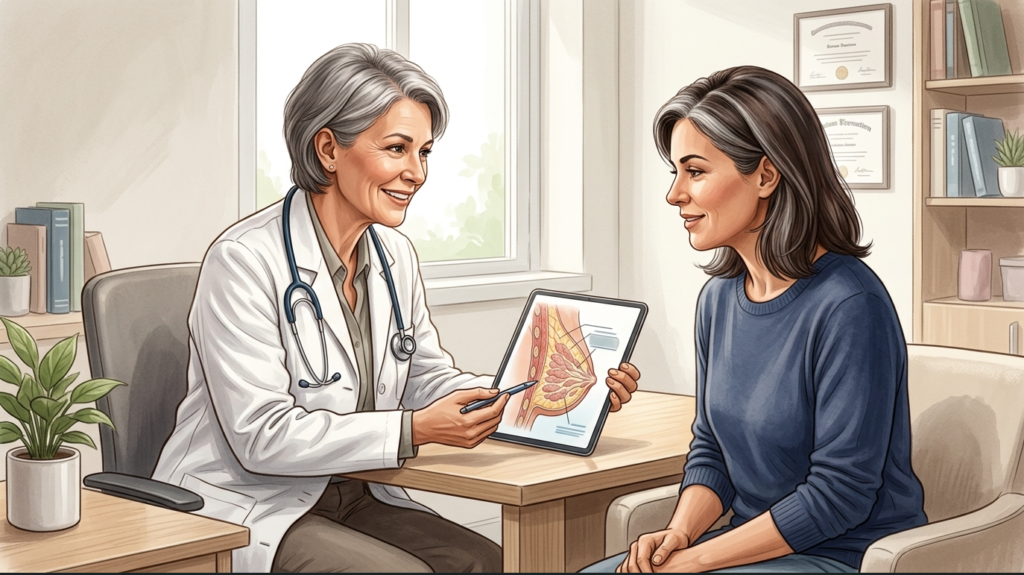
If you take your daughter to a doctor for irregular periods, the evaluation is usually thorough and reassuring.
What the doctor will do:
- Detailed Menstrual History: How old was she at first period? How often do periods come? How long do they last? How heavy is the flow? A period diary or app is very helpful.
- Medical History: Any chronic illnesses, medications, history of eating disorders, or family history of PCOS, thyroid disease, or bleeding disorders.
- Physical Exam: Includes height, weight, blood pressure, and assessment of pubertal development.
- Pelvic Exam: Usually NOT performed in young teens unless there is a specific concern like severe pain or suspected anatomical issue. Often, an external exam is sufficient.
- Blood Tests: May check:
- LH, FSH, estradiol: To assess ovarian function.
- Testosterone and DHEAS: To evaluate for PCOS.
- Thyroid-stimulating hormone (TSH): To rule out thyroid disease.
- Prolactin: To rule out hyperprolactinemia.
- Complete blood count: To check for anemia from heavy bleeding.
- Iron studies: To assess iron deficiency.
- Pelvic Ultrasound: May be ordered if PCOS or structural issues are suspected. In young girls, a transabdominal ultrasound (on the belly) is used, not a transvaginal one.
Treatment and Management
Treatment depends on the cause. For most teens, simple observation and lifestyle support are enough. For those with an underlying condition, targeted therapy is needed.
For Normal Developmental Irregularity
- Reassurance: Let her know that irregular periods are normal for the first 1–2 years.
- Cycle tracking: Use a calendar or app to monitor patterns.
- Healthy lifestyle: Regular meals, adequate sleep, moderate exercise, and stress management support regular cycles.
- Iron-rich diet: Especially if periods are heavy. Include spinach, lentils, fortified cereals, and lean red meat.
For Heavy Bleeding
- Iron supplementation: Only if recommended by a doctor after confirming iron deficiency.
- Nonsteroidal anti-inflammatory drugs (NSAIDs): Ibuprofen can reduce bleeding and ease cramps, but use only with a doctor’s guidance on dosing.
- Hormonal therapy: In some cases, a doctor may prescribe combined hormonal contraceptives to regulate cycles and reduce bleeding. This is a medical decision made with the family, considering age, maturity, and underlying health.
For PCOS
- Lifestyle modification: Weight management through balanced nutrition and regular physical activity is first-line.
- Hormonal contraceptives: May be used to regulate periods and reduce acne/hair symptoms.
- Metformin: Sometimes prescribed to improve insulin sensitivity in teens with PCOS, but only under specialist care.
For Eating Disorders or Extreme Exercise
- Nutritional rehabilitation: Working with a dietitian or adolescent medicine specialist.
- Psychological support: Therapy to address disordered eating or compulsive exercise.
- Reduced training intensity: Coordinating with coaches to ensure the girl’s health is prioritized.
Always consult a pediatrician, adolescent medicine specialist, or pediatric gynecologist before starting any treatment. Do not self-prescribe or use another person’s medication.
Prevention and Lifestyle Support
While you cannot prevent the hormonal maturation process, you can help your daughter build habits that support a regular cycle.
- Encourage balanced, regular meals: Skipping meals or restrictive eating disrupts the HPO axis.
- Support healthy sleep: Teens need 8 to 10 hours per night. Sleep deprivation affects reproductive hormones.
- Promote moderate, not excessive, exercise: Regular movement is healthy; compulsive, intense training is not.
- Teach stress management: Journaling, mindfulness, breathing exercises, or talking to a trusted adult can reduce cortisol levels that interfere with cycles.
- Maintain a healthy weight: Both being underweight and having excess body fat can disrupt ovulation.
- Normalize period tracking: Help her use a simple app or paper calendar without shame or secrecy.
- Create an open-door policy: Let her know she can ask you anything about her periods without embarrassment.
When to See a Doctor
Seek medical evaluation if your daughter:
- Has not had a period for 90 days or more after her first year of menstruation.
- Has cycles that remain shorter than 21 days or longer than 45 days after 2 years of menstruation.
- Soaks through a pad or tampon every 1–2 hours for several hours.
- Has periods lasting longer than 7 days.
- Passes large blood clots (bigger than a quarter).
- Has severe pain that interferes with daily activities or does not respond to over-the-counter medication.
- Has bleeding between periods after cycles have been established.
- Shows signs of PCOS: Irregular periods plus worsening acne, excess facial or body hair, or scalp hair thinning.
- Has symptoms of anemia: Extreme fatigue, dizziness, pale skin, or shortness of breath.
- Shows signs of an eating disorder: Significant weight loss, food restriction, excessive exercise, or distorted body image.
The VigorForty Take
At VigorForty, we see irregular periods in teenagers as an opportunity to teach body literacy and self-compassion. Many of us grew up with the message that our periods were a nuisance to be hidden, a sign of “women’s troubles” to be endured in silence. We can do better for our daughters.
Our holistic, practical recommendations:
1. Normalize the Unpredictability
Explain to your daughter that her body is like a new orchestra learning to play together. Sometimes the instruments are out of sync, and that is okay. This imagery removes the shame from irregularity and reframes it as a natural learning process.
2. Track Cycles Together—Without Obsession
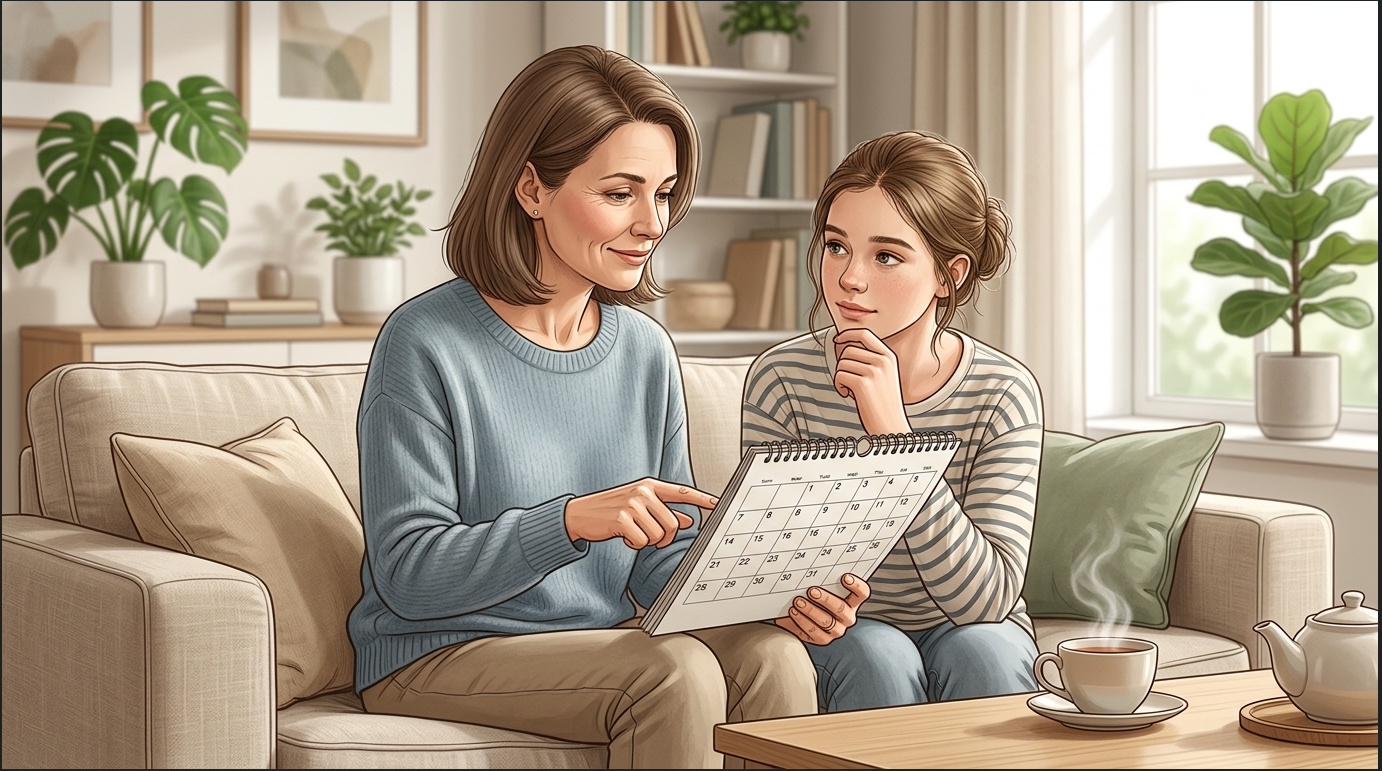
Start a shared period journal or use a simple tracking app. But do not become hyper-vigilant. The goal is awareness, not anxiety. Say, “We’re just noticing patterns, not judging them.”
3. Connect It to Your Own Journey
If you are in perimenopause, your cycles may also be irregular—heavier, lighter, longer, shorter. Share this with your daughter. Say, “My cycles are changing too. It’s strange, isn’t it, how our bodies go through seasons?” This creates solidarity rather than separation.
4. Watch for the Silent Red Flags
Irregular periods can sometimes mask an eating disorder or overtraining. If your daughter is losing weight, restricting food, or exercising compulsively, address it with love and professional support. Her cycle is a window into her overall health.
5. Advocate for Her at the Doctor
If you feel something is not right, push for answers. Do not accept “she’ll grow out of it” if her cycles are severely irregular, painful, or accompanied by other symptoms like excess hair growth or acne. You are her best advocate.
6. Reframe the Conversation
Instead of calling periods a “problem” or “inconvenience,” say: “Your period is one way your body tells you it is healthy. When it is irregular, it is worth listening to.” This teaches her to view her cycle as a vital sign, not a burden.
Irregular periods are often just a phase. But they can also be a whisper of something deeper. Stay curious, stay calm, and stay connected. That is what she needs most.
FAQ Section
Q1: How long does it take for a girl’s period to become regular?
A: Most girls establish a relatively predictable cycle within 1 to 2 years of their first period. However, some healthy teens continue to have mild irregularity into their late teens. If cycles are still very irregular after 2 years, see a doctor.
Q2: Is it normal for a 13-year-old to skip periods for months?
A: In the first year after menarche, skipping periods is common because many cycles are anovulatory. However, if she has been menstruating for more than a year and goes 90 days without a period, she should be evaluated.
Q3: Can stress really make a teenager’s period late?
A: Yes. High stress—from school, social issues, or family changes—can suppress the hypothalamus and delay ovulation, causing late or missed periods. This is a normal physiological response, but chronic stress that consistently disrupts cycles deserves attention.
Q4: What is the difference between irregular periods and PCOS in teens?
A: Irregular periods are common in all teens, especially early on. PCOS is a specific hormonal disorder characterized by irregular periods plus signs of excess androgens, such as severe acne, unwanted facial or body hair, or scalp hair thinning. A doctor can evaluate for PCOS with a physical exam, blood tests, and sometimes an ultrasound.
Q5: Should my daughter see a gynecologist or a pediatrician for irregular periods?
A: Start with her pediatrician or family doctor. They can evaluate basic concerns and refer to an adolescent gynecologist or pediatric endocrinologist if needed. For most irregular period concerns, a primary care provider is well equipped to help.
Q6: Can heavy periods be normal in teenagers?
A: Some heaviness is normal, especially in the first year. However, soaking through a pad or tampon every 1–2 hours, passing large clots, or bleeding for more than 7 days is not normal and should be evaluated. Heavy bleeding can cause iron deficiency and anemia.
Q7: Will birth control pills fix irregular periods in teens?
A: Hormonal contraceptives can regulate cycles and reduce heavy bleeding, but they do not “fix” the underlying cause if there is one. They are a tool, not a cure. The decision to use hormonal therapy in a teenager should be made carefully with a doctor, considering her age, symptoms, and overall health.
Conclusion
Irregular periods in teenage girls are usually a sign of a body still learning its rhythm, not a cause for alarm. The first year or two after menarche are characterized by unpredictability—skipped months, variable flow, and cycles that refuse to follow a calendar. This is the hormonal system maturing in real time.
But as mothers, we know that “usually normal” does not mean “always normal.” There are patterns that deserve a closer look: extremely heavy bleeding, cycles that never settle after two years, severe pain, or signs of a deeper hormonal imbalance.
The key is observation without anxiety, support without shame. Track the cycles, listen to her body, and seek medical guidance when something feels off. You are not just managing periods; you are teaching your daughter to understand and respect her body for the rest of her life.
References
- American College of Obstetricians and Gynecologists. (2023). Menstruation in girls and adolescents: Using the menstrual cycle as a vital sign. https://www.acog.org/clinical/clinical-guidance/committee-opinion/articles/2015/12/menstruation-in-girls-and-adolescents-using-the-menstrual-cycle-as-a-vital-sign
- National Institute of Child Health and Human Development. (2021). Menstruation and the menstrual cycle. https://www.nichd.nih.gov/health/topics/menstruation
- Mayo Clinic. (2023). Irregular periods. https://www.mayoclinic.org/symptoms/irregular-periods/basics/definition/sym-20050877
- Cleveland Clinic. (2023). Amenorrhea in teens. https://my.clevelandclinic.org/health/diseases/22212-amenorrhea-in-teens
- Harvard Health Publishing. (2022). Polycystic ovary syndrome (PCOS). https://www.health.harvard.edu/a_to_z/polycystic-ovary-syndrome-a-to-z