Author Box
Author: Vigor Forty Editorial Team
Medically Reviewed By: Editorial Review Board
Last Updated: August 23, 2026
Medical Disclaimer
Disclaimer: This article is for informational purposes only and is not a substitute for professional medical advice, diagnosis, or treatment. Always seek the advice of your physician or other qualified health provider with any questions you may have regarding a medical condition. Consult your physician before beginning a new exercise, diet, or supplement program, especially if you have an underlying health condition or are immunocompromised. Read our full Medical Disclaimer at vigorforty.com/disclaimer.
Breast Changes in Your 20s: Monthly Hormonal Fluctuations
Introduction
You are 25, and suddenly your breasts feel different. One week they are full and tender, the next they feel soft and normal. You notice a slight lumpiness that was not there before, or your bra fits differently depending on the day of the month. Is this normal? Should you be worried?
For women in their 20s, monthly breast changes are among the most common—and least discussed—physical experiences. The breasts are not static organs; they are dynamic, hormone-responsive tissue that shifts throughout the menstrual cycle. Understanding these fluctuations can replace anxiety with knowledge.
For women over 40, reflecting on this topic carries a bittersweet familiarity. We remember the monthly tenderness of our younger years, often without understanding its cause. Now, as our own breasts change with perimenopause and menopause, we have a deeper appreciation for the lifelong dialogue between hormones and breast tissue. This guide explains what happens in your 20s, what is normal, and when to seek help.
📌 Key Takeaways
- Monthly Changes Are Normal: Breast tenderness, swelling, and lumpiness that fluctuate with the menstrual cycle are common and usually benign.
- Hormones Drive the Cycle: Estrogen and progesterone cause breast tissue to retain fluid and feel fuller in the days before a period.
- Fibrocystic Changes Are Common: Many women in their 20s experience benign fibrocystic breast tissue—lumpy, sometimes tender areas that shift with the cycle.
- Timing Matters: Symptoms typically worsen in the luteal phase (after ovulation) and improve once menstruation begins.
- Know Your Baseline: Regular breast self-awareness—not necessarily formal self-exams—helps you recognize what is normal for you.
- Red Flags to Watch: A new, persistent lump, nipple discharge, skin changes, or pain that does not follow a cyclical pattern should be evaluated by a doctor.
Understanding Breast Tissue and Hormones
The female breast is not a single organ but a complex arrangement of glandular tissue, fibrous connective tissue, and fat. The proportions of these components vary from woman to woman and change with age, pregnancy, and hormonal status.
Breast tissue is highly sensitive to hormones. The two main players are:
- Estrogen: Stimulates the growth and development of milk ducts.
- Progesterone: Promotes the development of milk-producing lobules and causes fluid retention in breast tissue during the second half of the menstrual cycle.
These hormones rise and fall in a predictable pattern each month. As they fluctuate, they influence the size, texture, and sensitivity of the breasts.
The Menstrual Cycle and Breast Changes
To understand monthly breast changes, it helps to map them onto the phases of the menstrual cycle.
| Cycle Phase | Hormonal Activity | Typical Breast Symptoms |
|---|---|---|
| Menstrual Phase (Days 1–5) | Both estrogen and progesterone are low | Breasts feel soft, less tender; any premenstrual swelling subsides |
| Follicular Phase (Days 6–13) | Estrogen rises steadily | Breasts may feel normal or slightly fuller as ducts prepare |
| Ovulation (Around Day 14) | LH surge, estrogen peaks | Some women feel mild breast or nipple sensitivity |
| Luteal Phase (Days 15–28) | Progesterone peaks, estrogen stays elevated | Breasts become fuller, heavier, tender, and sometimes lumpy; fluid retention peaks |
| Premenstrual (Days 25–28) | Both hormones drop sharply | Maximum tenderness, swelling, and lumpiness before period starts |
Adapted from American College of Obstetricians and Gynecologists [1].
The luteal phase is when most women notice the most significant changes. Progesterone causes the breast lobules to swell and the tissue to retain fluid. Blood flow to the breasts also increases. The result is a feeling of fullness, heaviness, and tenderness that can range from mild to quite uncomfortable.
Causes: Why Breasts Change Monthly
Several hormonal and physiological factors contribute to cyclical breast changes.
1. Hormonal Fluctuations
The rise in progesterone during the luteal phase is the primary driver of monthly breast changes. Progesterone causes the milk glands to swell and the connective tissue to retain water. Estrogen also contributes by promoting ductal growth [2].
2. Fluid Retention
Hormonal shifts cause the body to retain sodium and water. The breasts, being glandular and vascular, are particularly affected. This extra fluid makes the breasts feel heavy, swollen, and tender.
3. Fibrocystic Changes
Many women in their 20s and 30s have what doctors call fibrocystic breast tissue. This is a benign (non-cancerous) condition characterized by:
- Lumpy, rope-like or nodular areas in the breasts
- Tenderness that fluctuates with the cycle
- Sometimes a feeling of fullness or dull ache
Fibrocystic changes are so common that some experts consider them a normal variant rather than a disease [3]. They are not associated with an increased risk of breast cancer in most cases, though they can make breast examination more challenging.
4. Caffeine and Dietary Factors
Some women find that caffeine, chocolate, or high-salt foods worsen breast tenderness. The evidence is mixed, but reducing these substances may help some individuals [2].
5. Stress and Lifestyle
Stress hormones can amplify the body’s sensitivity to hormonal fluctuations. Poor sleep, excessive alcohol, and lack of exercise may also contribute to breast discomfort.
Symptoms: What Women Experience
Monthly breast changes can manifest in several ways. Knowing the range of normal can reduce anxiety.
Common cyclical breast symptoms:
- Tenderness or soreness: A dull ache or sharp twinges, usually in the upper outer portion of the breast, but can be generalized.
- Swelling or fullness: Breasts may feel larger or heavier; the bra may fit more snugly.
- Lumpiness: A general nodularity, often in both breasts, that becomes more prominent before the period.
- Heaviness: A sensation of weight in the chest.
- Nipple sensitivity: Nipples may feel more tender or tingly.
- Asymmetry: One breast may feel more affected than the other during a given cycle.
These symptoms typically peak in the days just before the period and resolve within the first few days of bleeding. If symptoms do not follow this pattern, or if they are severe, further evaluation is warranted.
Normal vs. Concerning Breast Changes
It is crucial to distinguish between benign cyclical changes and symptoms that require medical attention.
| Feature | Normal Cyclical Changes | Concerning Changes |
|---|---|---|
| Timing | Worsen premenstrually, improve with period | Persistent, not tied to cycle |
| Location | Both breasts, often upper outer quadrants | One specific, discrete area |
| Lump | Diffuse nodularity; changes with cycle | Hard, fixed, or new persistent lump |
| Pain | Mild to moderate, bilateral | Severe, localized, or one-sided persistent pain |
| Nipple discharge | None or minimal, milky | Bloody, spontaneous, or one-sided discharge |
| Skin changes | None | Dimpling, redness, thickening, or retraction |
If you notice any of the concerning features, see a doctor. Most breast problems in young women are benign, but it is always better to evaluate.
Diagnosis: How Doctors Evaluate Breast Changes
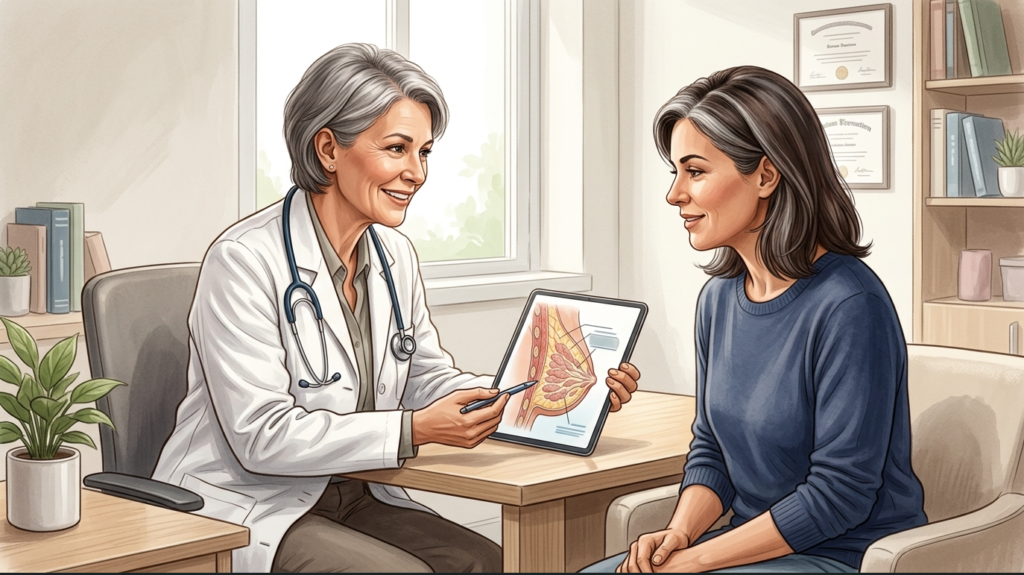
If you are concerned about breast changes, a healthcare provider can help. Evaluation typically includes:
- Clinical Breast Exam (CBE): The doctor will feel both breasts, the underarms, and the collarbone area to check for lumps or abnormalities.
- Medical History: They will ask about the timing of symptoms, menstrual regularity, family history, and any medications.
- Imaging (if needed):
- Ultrasound: The preferred imaging for women under 30 because breast tissue is dense. It can distinguish solid masses from fluid-filled cysts.
- Mammogram: Rarely used in the 20s unless there is a strong family history or a suspicious finding.
- Biopsy (rare): If a solid mass is found and imaging cannot confirm it is benign, a small sample may be taken.
Important: Most breast symptoms in the 20s do not require any imaging. A careful history and physical exam are often enough to provide reassurance.
Treatment and Management: Easing Monthly Discomfort
For most women, cyclical breast changes do not require medical treatment. However, if symptoms are bothersome, several strategies can help.
Lifestyle and Self-Care
- Wear a well-fitted, supportive bra: A soft, non-underwire sports bra or a properly fitted bra can reduce breast movement and discomfort, especially during the luteal phase.
- Apply heat or cold: A warm compress or a cold pack can ease tenderness. Experiment to see which feels better for you.
- Reduce salt intake: Lowering sodium in the premenstrual week can reduce fluid retention and breast swelling.
- Limit caffeine: Some women find that cutting back on coffee, tea, chocolate, and cola improves breast pain. This is not universal, but a trial of 2–3 months may be worth trying.
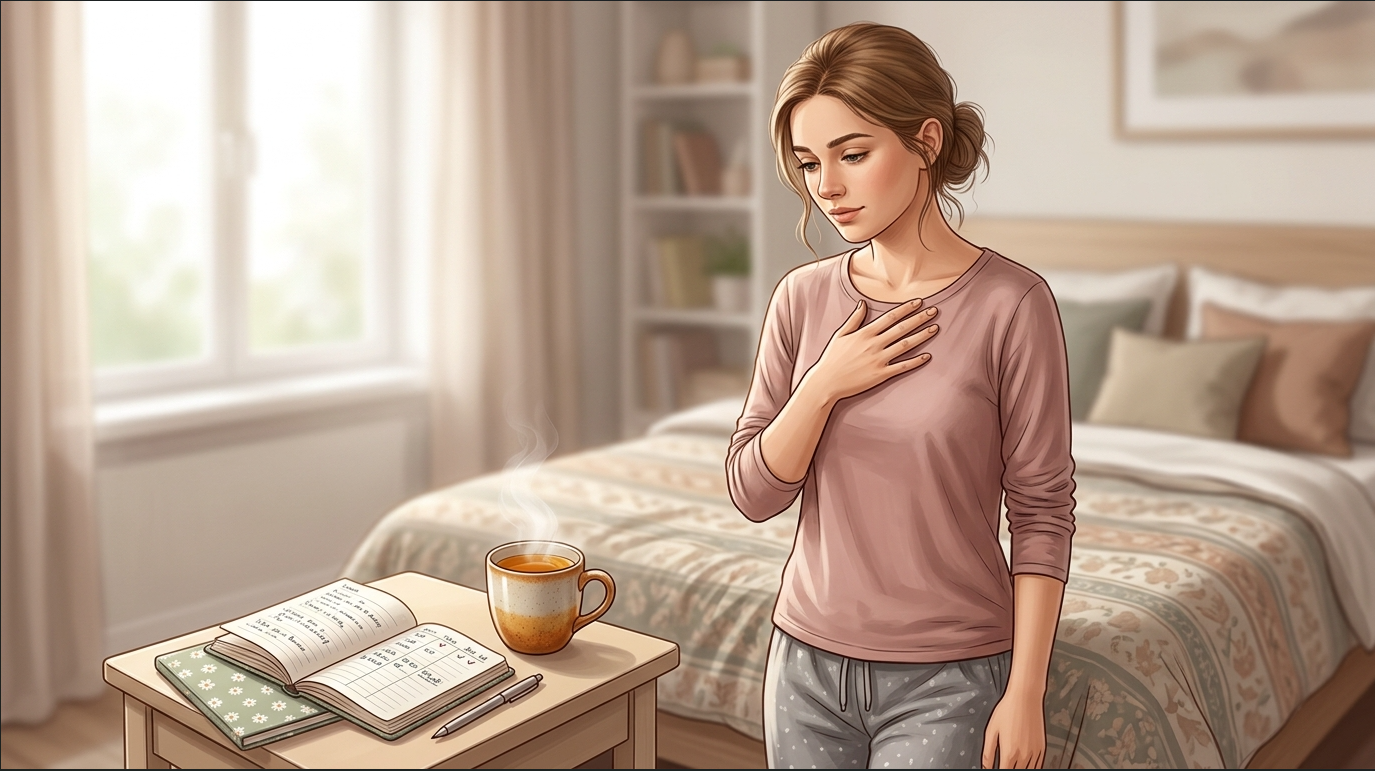
- Track your cycle: A simple period app or journal can help you anticipate symptoms and distinguish normal cyclical changes from new concerns.
- Over-the-counter pain relief: NSAIDs like ibuprofen or naproxen can reduce pain and inflammation. Always follow dosing instructions and consult a doctor if you have underlying health conditions.
- Evening primrose oil or vitamin E: Some women report relief from these supplements, though evidence is limited. Discuss with a doctor before starting any supplement.
Medical Treatments
If lifestyle measures are insufficient and pain is severe, a doctor may consider:
- Hormonal contraceptives: Combined oral contraceptives can stabilize hormonal fluctuations and reduce cyclical breast pain in some women. This is a medical decision made with a healthcare provider.
- Danazol or tamoxifen: Rarely used for severe breast pain; these are reserved for cases that do not respond to other treatments and require specialist supervision.
Do not self-medicate with hormones or supplements without professional guidance.
Prevention: Maintaining Breast Health in Your 20s
While you cannot completely prevent cyclical breast changes, you can support breast health through healthy habits.
- Maintain a healthy weight: Excess body fat increases estrogen production, which may worsen breast symptoms and is associated with higher breast cancer risk later in life.
- Exercise regularly: Physical activity can reduce breast tenderness and is associated with lower breast cancer risk.
- Limit alcohol: Alcohol increases estrogen levels and is a known risk factor for breast cancer. If you drink, keep it moderate.
- Do not smoke: Smoking is harmful to overall health and has been linked to breast pain in some studies.
- Eat a balanced diet: A diet rich in fruits, vegetables, whole grains, and lean protein supports hormonal balance.
- Practice breast self-awareness: Know how your breasts normally look and feel, so you can recognize any new changes promptly.
Note on self-exams: Formal monthly breast self-exams are no longer universally recommended. Instead, focus on breast self-awareness—being familiar with your breasts and noticing any changes during daily activities like showering or dressing. Report any persistent changes to your doctor.
When to See a Doctor
Seek medical evaluation if you notice any of the following:
- A new, hard, or fixed lump that does not change with your cycle.
- A lump that persists for more than one full cycle.
- Nipple discharge that is spontaneous, bloody, or from one breast only.
- Skin changes such as dimpling, puckering, redness, thickening, or a rash that does not resolve.
- Nipple retraction or inversion that is new.
- Persistent, severe pain that does not improve after your period or with over-the-counter measures.
- A breast infection with warmth, redness, and fever.
- Changes that cause significant anxiety—your peace of mind matters. It is always okay to get checked.
The VigorForty Take
At VigorForty, we look at the monthly breast changes of the 20s as a beautiful, if sometimes uncomfortable, sign of a healthy, functioning reproductive system. The tenderness, the fullness, the ebb and flow—these are not flaws. They are evidence that your body is alive and responding to its natural rhythms.
For women over 40, reflecting on this topic is also a reminder of how breasts change across a lifetime. The cyclic tenderness of the 20s often gives way to different sensations in the 40s and 50s—less cyclical, more related to hormonal shifts of perimenopause. Breasts may become less dense, more fatty, and change in shape. This is not loss; it is evolution.
Our holistic, practical recommendations:
1. Honor the Rhythm
Instead of dreading the monthly breast tenderness, try to see it as a signal. Your body is communicating with you. Track your cycle, anticipate the changes, and plan self-care around them—a softer bra, a warm bath, a little extra rest.
2. Be Kind to Your Breasts
They are not just ornaments. They are functional, living tissue that deserves respect. Wear bras that support without constricting. Moisturize the skin. Treat them gently, just as you would any other part of your body.
3. Know Your Normal
Breast self-awareness is a lifelong skill. In your 20s, learn what your breasts feel like at different times of the month. This knowledge becomes invaluable as you age, helping you distinguish between a benign cyclical lump and something that needs attention.
4. Do Not Let Fear Silence You
If something feels wrong, speak up. Do not be embarrassed. Doctors have seen it all, and they would rather reassure you than miss something. Your health is more important than any awkwardness.
5. Connect the Generations
If you have a daughter or a younger woman in your life, talk about breast health openly. Say, “You might notice your breasts feel tender before your period. That’s normal. Let’s track it together.” Break the silence that has kept too many women uninformed.
6. Schedule Regular Screenings When the Time Comes
While mammograms are not routine in the 20s, they become important later. If you are over 40, stay on top of your screenings. Your breast health is a lifelong commitment, not a one-time event.
Breast changes in your 20s are not a problem to be solved. They are a part of being a woman—a rhythm to be understood, respected, and even appreciated. Trust your body. Listen to it. And when in doubt, always seek reassurance from a professional.
FAQ Section
Q1: Is it normal for one breast to be more tender than the other before my period?
A: Yes. It is common for one breast to feel more tender, swollen, or lumpy than the other during the premenstrual phase. Breasts are not perfectly symmetrical, and hormonal sensitivity can vary from side to side. As long as the tenderness follows your cycle and resolves after your period, it is usually normal.
Q2: Can breast tenderness in my 20s be a sign of cancer?
A: Breast cancer is very rare in women in their 20s. Cyclical breast tenderness that comes and goes with your period is far more likely to be a benign hormonal change. However, a new, persistent, hard lump, nipple discharge, or skin changes should always be evaluated by a doctor, regardless of age.
Q3: How long before my period does breast tenderness typically start?
A: Most women notice breast tenderness beginning 7 to 10 days before their period, during the luteal phase when progesterone peaks. The tenderness usually peaks in the last few days before bleeding and subsides within the first few days of menstruation.
Q4: Should I be worried about lumpy breasts in my 20s?
A: Lumpy or nodular breasts, especially if the lumps are in both breasts and fluctuate with your cycle, are often due to benign fibrocystic changes. This is very common. However, if you feel a new, hard, or persistent lump that does not go away after your period, see a doctor for evaluation.
Q5: Can birth control pills help with breast pain?
A: Combined hormonal contraceptives can sometimes reduce cyclical breast pain by stabilizing hormone levels. This is a medical decision that should be discussed with a healthcare provider, as birth control is not suitable for everyone and may have side effects.
Q6: Does caffeine really make breast tenderness worse?
A: Some women report that caffeine worsens breast pain, though studies have not consistently proven this link. If you notice a pattern, you could try eliminating caffeine for 2–3 months to see if your symptoms improve. Be sure to also reduce other potential triggers like salt and stress.
Q7: When should I see a doctor about breast changes?
A: See a doctor if you notice a new hard lump, spontaneous nipple discharge (especially bloody), skin dimpling or redness, nipple retraction, or any breast change that is persistent, not related to your cycle, or causing you significant worry. It is always better to get checked.
Conclusion
The breasts are not static. They are living, hormone-responsive tissue that changes throughout the month and throughout life. In your 20s, those changes are most closely tied to the menstrual cycle—a monthly reminder of the body’s intricate hormonal dance.
Understanding this connection can transform fear into familiarity. The tenderness, swelling, and lumpiness you feel are usually not signs of disease. They are signs of a healthy reproductive system doing what it was designed to do.
For women over 40, this knowledge is also a bridge. The same hormones that once caused monthly breast changes are now shifting again, bringing a different set of sensations. But the lesson is the same: know your body, listen to its signals, and seek care when something feels off.
Your breasts have carried you through every decade. Treat them with attention, respect, and regular medical care. They are part of the story of your health—a story that is still being written.
References
- American College of Obstetricians and Gynecologists. (2023). Benign breast problems and conditions. https://www.acog.org/womens-health/faqs/benign-breast-problems-and-conditions
- Mayo Clinic. (2023). Breast pain. https://www.mayoclinic.org/symptoms/breast-pain/basics/definition/sym-20050918
- Cleveland Clinic. (2023). Fibrocystic breasts. https://my.clevelandclinic.org/health/diseases/15238-fibrocystic-breasts