
Author: Vigor Forty Editorial Team
Medically Reviewed By: Editorial Review Board
Disclaimer: This article is for informational purposes only and is not a substitute for professional medical advice. Consult your physician before making significant changes to your diet, exercise, or supplement regimen. Read our full Medical Disclaimer.
📌 Key Takeaways
- Biohacking Is Not Just for Tech Millionaires: The term has been co-opted by expensive gadgets and extreme diets, but at its core, biohacking simply means using science, self-experimentation, and lifestyle design to improve your biology. The most powerful biohacks—sleep, movement, heat, cold, and breath—are either free or very low-cost.
- Hormesis Is the Unifying Principle: Many effective biohacks work through hormesis—exposing your body to mild, transient stress that triggers adaptive repair responses. This makes your cells more resilient to future stress and slows multiple hallmarks of aging. Exercise, sauna, cold exposure, and certain plant compounds all work this way.
- You Don’t Need a $5,000 Setup to Move the Needle: Consistent use of a few basic tools—a thermometer for your bedroom, a timer for your eating window, a cool shower, a pair of walking shoes—will deliver 80% of the benefits of far more elaborate protocols.
- Tracking Is the “Hack” That Multiplies Every Other Hack: You can’t improve what you don’t measure. Simple tracking of sleep, heart rate variability, blood pressure, and subjective energy levels gives you a feedback loop that lets you see which biohacks are actually working for your unique body.
- The VigorForty Biohacking Stack Integrates Seamlessly With Your Existing Habits: Most of these tools are already woven into your morning stack, your exercise snacks, and your supplement protocol. The biohacking mindset simply makes you more intentional and systematic about them.
Introduction: You Can Hack Your Biology Without Breaking the Bank
The word “biohacking” conjures images of tech executives implanting microchips, spending thousands on hyperbaric chambers, or drinking strange concoctions in pursuit of eternal youth. That’s the Hollywood version. The real, evidence-based biohacking that matters for Americans over 40 is far simpler, far cheaper, and far more effective. It’s about using precise, intentional lifestyle practices to influence your cellular machinery—the very mitochondria, autophagy pathways, and sirtuins you’ve been reading about in this series.
Biohacking, stripped of its Silicon Valley gloss, is self-experimentation guided by science. It’s the process of identifying a small intervention—a 30-second cold shower, a 20-minute sauna session, a specific breathing pattern—implementing it consistently, and tracking the results. When something works, you keep it. When it doesn’t, you drop it. This empirical, personalized approach is perfectly suited to the midlife body, which responds differently than a 25-year-old’s and deserves a more nuanced, responsive protocol.
This article gives you a curated, low-cost biohacking toolkit. You’ll learn about heat and cold exposure, advanced breathwork, sleep environment optimization, simple intermittent fasting tweaks, and how to use consumer tests to track your biological age. Every tool is grounded in human research, and every one can be implemented with items you likely already own or can acquire for under $50. This is biohacking for the rest of us—practical, affordable, and built to add healthspan, not just lifespan.
Section 1: Hormesis—The Biology Behind Biohacking
Before diving into specific tools, it’s essential to understand the principle that makes most biohacks work: hormesis. Hormesis is a biological phenomenon where exposure to a low dose of a stressor activates protective mechanisms that make the organism more resilient to higher doses of that same stressor—or to other stresses entirely.
How Hormesis Works in Your Cells:
When a cell is exposed to mild heat, cold, oxidative stress, or nutrient deprivation, it doesn’t just endure it. It activates ancient defense pathways: heat shock proteins that repair damaged proteins, antioxidant enzymes that neutralize free radicals, AMPK that improves energy efficiency, and sirtuins that stabilize the epigenome. The cell emerges from the mild stress not just unharmed but stronger, cleaner, and more resilient. This is the biological equivalent of weight training: you tear muscle fibers down slightly, and they rebuild thicker and stronger.
Why Hormesis Matters More After 40:
In youth, the body’s repair systems are robust and baseline stress resistance is high. After 40, these systems begin to falter, and chronic low-grade stress (the bad kind, from poor sleep, inflammation, and cortisol) suppresses them further. Strategic, acute hormetic stress—the kind you apply intentionally and recover from—wakes these systems back up. It tells your cells, “We’re not done yet. Stay vigilant. Stay resilient.” The biohacks in this article are, almost without exception, hormetic tools applied with precision.
Section 2: Heat Exposure—The Sauna and Beyond
Heat stress is one of the most heavily researched and beneficial hormetic interventions available.
The Evidence:
The Kuopio Ischemic Heart Disease study in Finland tracked over 2,300 men for two decades. Those who used the sauna 4–7 times per week had a 40% lower risk of all-cause mortality, a 50% lower risk of cardiovascular death, and a 66% lower risk of dementia compared to those who used it once a week. These are staggering numbers. The mechanisms are multi-faceted: improved endothelial function, reduced inflammation (lower CRP and IL-6), lower blood pressure, increased heart rate variability, and the activation of heat shock proteins that repair misfolded proteins and improve proteostasis.
How to Do It Inexpensively:
- Traditional Sauna: If you have access to a gym with a sauna, use it. Aim for 15–20 minutes at 170–180°F, 2–4 times per week. Hydrate well before and after.
- Infrared Sauna: Lower temperature (120–140°F) with similar benefits. Infrared panels can be purchased for home use, but that’s an investment. A gym membership with infrared sauna access is cheaper.
- The Hot Bath Alternative: If you don’t have sauna access, a hot bath can provide a hormetic heat dose. Fill a tub as hot as tolerable (aim for 104°F / 40°C), submerge your body for 20–30 minutes, and ensure you sweat. A 2020 study found that regular hot baths improved cardiovascular markers and reduced inflammation similarly to exercise. Add Epsom salts for magnesium absorption as a bonus.
- Portable Steam Sauna: A pop-up steam sauna that fits in a closet costs $100–$200 and provides effective heat stress at a fraction of the price of a built-in unit.
Safety: Heat exposure is not for everyone. Avoid if you are pregnant, have unstable cardiovascular disease, or have low blood pressure that causes fainting. Stay hydrated, and never use a sauna or hot bath while intoxicated. Listen to your body; if you feel dizzy, exit immediately.
Section 3: Cold Exposure—Vasoconstriction, Vagus Nerve, and Brown Fat
Cold exposure is the flip side of the hormetic coin. Brief, controlled cold activates the sympathetic nervous system, then triggers a powerful parasympathetic rebound, strengthening vagal tone—the brake on your fight-or-flight system. It also stimulates brown adipose tissue (BAT), a metabolically active fat that burns calories to generate heat.
The Evidence:
Regular cold exposure has been shown to:
- Increase brown fat activity and improve insulin sensitivity.
- Boost norepinephrine, which enhances focus and reduces inflammation.
- Elevate heart rate variability (HRV), signaling improved autonomic balance.
- Reduce post-exercise muscle soreness, which is why athletes take ice baths.
For the 40+ American, cold exposure is particularly effective at improving HRV and stress resilience. It’s a direct vagus nerve stimulant.
How to Do It Inexpensively:
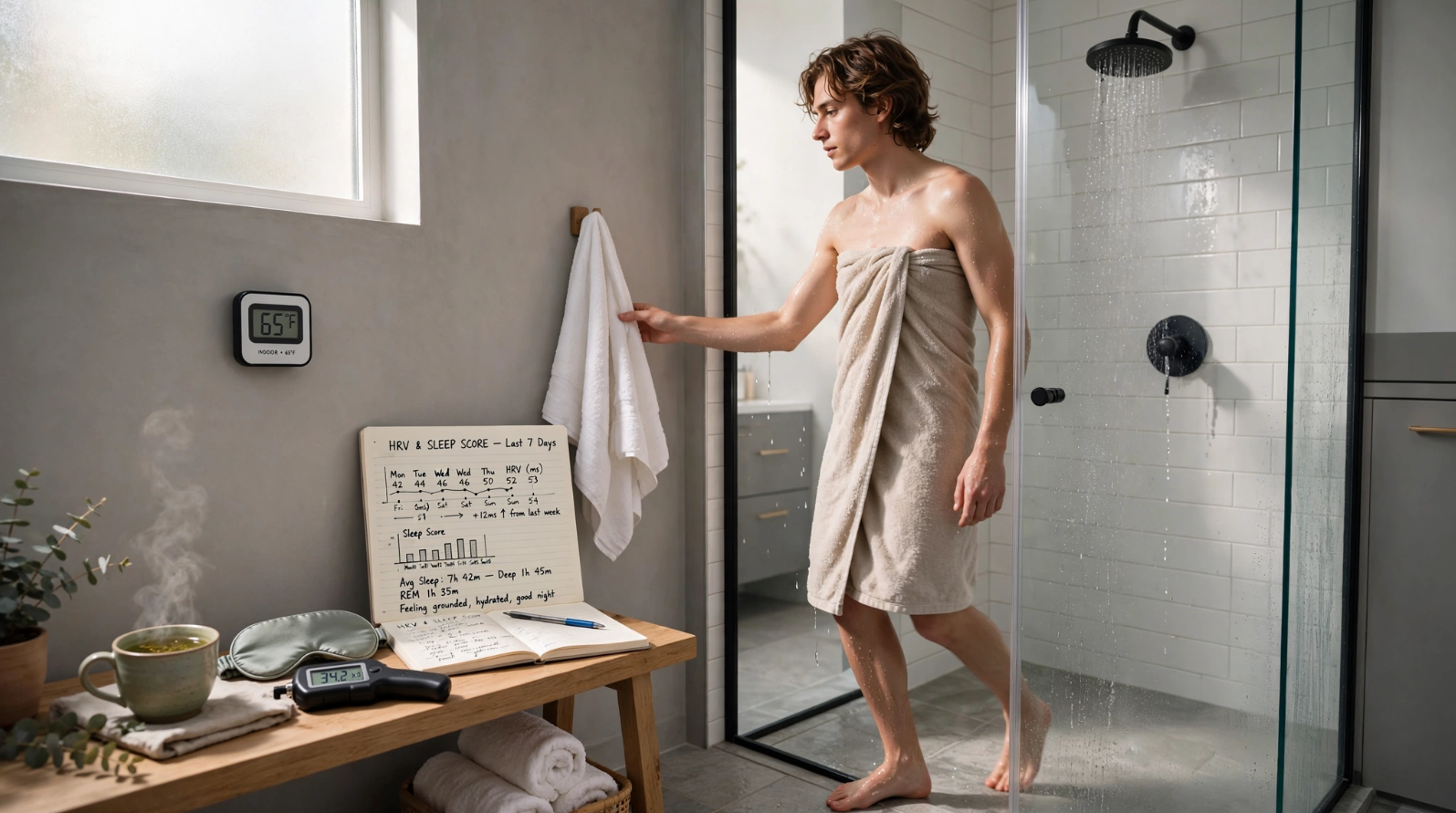
- Cold Water Finisher: At the end of your normal warm shower, turn the water to cold (50–60°F is ideal, but whatever your tap produces). Stand under it for 30 seconds, focusing on slow, controlled breathing. Increase to 60–90 seconds over a few weeks. Total cost: $0.
- Cold Plunge in a Tub: Fill a bathtub with cold water, add ice if desired, and submerge for 2–5 minutes. This is an advanced option. Start with cold showers before attempting full immersion.
- Outdoor Cold Exposure: In winter, a brisk walk in shorts and a t-shirt for 5–10 minutes provides cold exposure. In summer, a dip in a cold lake or unheated pool works.
The Protocol:
- Frequency: 3–5 times per week.
- Duration: 30 seconds to 3 minutes. More is not better; the hormetic window is brief.
- Breathing: The key is slow, controlled exhales. The cold will trigger a gasp reflex and rapid breathing; consciously slow your breath, especially the exhale. This trains the vagus nerve powerfully.
Safety: Cold exposure causes a temporary spike in blood pressure. If you have uncontrolled hypertension, discuss with your doctor. Never do cold immersion alone if you’re prone to fainting.
Section 4: Advanced Breathwork—The Free, Portable Nervous System Hack
You’ve already been introduced to the simple 3-breath pause and the 5-minute hammock breathwork session. Breathwork can go deeper and serve as a standalone biohacking practice with profound effects on HRV, stress, and even immune function.
The Wim Hof Method (Cyclic Hyperventilation + Breath Holds):
This method combines 30–40 rapid, deep breaths (hyperventilation) with a long breath-hold on the exhale. It acutely activates the sympathetic nervous system, followed by a profound parasympathetic rebound. Studies have shown that practitioners can voluntarily influence their immune response, reducing inflammatory markers when exposed to an endotoxin. This is a potent, hormetic breathwork practice.
How to Do It (Basic Protocol):
- Sit or lie down comfortably.
- Take 30–40 deep, rapid breaths: full inhale through the nose or mouth, relaxed exhale. No pause between breaths. You’ll feel tingling, lightheadedness—this is normal.
- After the last exhale, hold your breath with empty lungs. Stay here for as long as comfortable (1–2 minutes).
- When you need to breathe, take a deep inhale and hold it for 15 seconds, then exhale.
- Repeat 2–3 rounds.
- Total time: 10–12 minutes.
Box Breathing (Tactical Breathing):
Used by Navy SEALs and first responders for acute stress control. Inhale 4 seconds, hold 4 seconds, exhale 4 seconds, hold 4 seconds. Repeat for 5–10 minutes. This activates the parasympathetic system and improves HRV. Excellent before bed or during a stressful moment.
Coherent Breathing (Resonant Frequency Breathing):
Breathe at a rate of 5–6 breaths per minute, with equal inhale and exhale (5.5 seconds in, 5.5 seconds out). This matches the resonant frequency of the cardiovascular system and maximally amplifies HRV. Do this for 10–20 minutes daily. It’s the simplest, most evidence-backed breathwork for long-term autonomic health.
Cost: $0. All you need is a timer and a quiet space.
Section 5: Sleep Optimization—The Bedroom as a Biohacking Lab
You already know sleep is foundational. Biohacking sleep means moving beyond basic hygiene into precise environmental control.
Temperature Hacking:
The ideal sleep temperature for most people is 60–67°F (15–19°C). A drop in core body temperature is required to initiate and maintain deep sleep. If your bedroom is warmer than this, your sleep quality suffers. Use a fan, a cooling mattress pad ($50–$100), or simply crack a window. An affordable room thermometer helps you dial this in precisely.
Light Hacking:
Even tiny amounts of light—from an alarm clock, a streetlamp through curtains, a power strip LED—can suppress melatonin and fragment sleep. Use blackout curtains ($20–$40) or a sleep mask ($15–$30). Remove all light-emitting electronics from the bedroom or cover the LEDs. Two to three hours before bed, wear blue-light-blocking glasses ($20–$40) if you must use screens. These are low-cost, high-impact interventions.
Sound Hacking:
White noise or pink noise machines ($20–$50) mask disruptive environmental sounds and can deepen sleep consistency. Earplugs ($15 for a reusable pair) are another inexpensive option for light sleepers or partners of snorers.
Caffeine Timing Hacking:
Caffeine has a half-life of 5–6 hours, meaning a 2 PM coffee leaves significant caffeine in your system at 10 PM. Experiment with a 12 PM caffeine curfew. This single shift can dramatically improve your deep sleep and HRV scores.
Section 6: Intermittent Fasting Tweaks—The Nuances That Matter
You’re already practicing a 12–14 hour overnight fast. For deeper autophagy and metabolic benefits, consider these tweaks.
Early Time-Restricted Feeding (eTRF):
Eating earlier in the day aligns with circadian biology. Your insulin sensitivity and glucose tolerance are highest in the morning and decline throughout the day. An eating window from 8 AM to 4 PM, or 9 AM to 5 PM, improves insulin sensitivity and blood pressure more than the same window shifted later (e.g., noon to 8 PM). Experiment with moving your last meal earlier by one hour and observe your sleep and morning fasting glucose.
Fasted Morning Exercise:
As discussed in the mitochondrial article, exercising in a fasted state (before breakfast) amplifies AMPK activation and fat oxidation. A 30-minute fasted walk or light bodyweight session costs nothing and enhances autophagy. If you do high-intensity training, you may need a small pre-workout protein to prevent muscle breakdown; fasted exercise is best for Zone 2 and moderate work.
The 5:2 Light Approach (Optional):
For some, two non-consecutive days per week of very light eating (500–600 calories) provides a stronger autophagy stimulus and metabolic reset. This is not required and should only be attempted if you are metabolically stable and have discussed it with your physician. For most, a daily 12–14 hour fast is sufficient and sustainable.
Section 7: Consumer Biological Age Testing—Tracking Your Progress
You learned about biological age testing in the Biological Aging Guide. Tracking your biological age once a year is a powerful biohacking feedback tool.
The Tests:
- Epigenetic Clocks (TruDiagnostic, Elysium Index, myDNAge): Cost $200–$500. A saliva or blood sample. These are the most scientifically validated consumer tests.
- GlycanAge: Measures glycosylation patterns on antibodies as a marker of immune and inflammatory aging. Around $300.
- Do-It-Yourself Dashboard: Track your own metrics that correlate with biological age: grip strength, gait speed, VO2 max estimate (from a wearable), resting heart rate, and blood pressure. A yearly improvement or stabilization in these markers is a DIY biological age test that costs nothing.
Protocol: Take a baseline test, implement your chosen biohacks for 9–12 months, then retest. One data point is interesting; two data points show a trend. Don’t test too frequently—the changes are gradual.
Section 8: The VigorForty $50 Biohacking Starter Kit
If you’re starting from scratch, here’s what to buy and what to do with a minimal budget.
| Item | Approx. Cost | Biohack |
|---|---|---|
| Cooling sleep mask | $20 | Light elimination, deeper sleep |
| Room thermometer | $10 | Dial in sleep temperature (60–67°F) |
| Digital bath thermometer | $10 | Safe hot bath protocols, cold bath temp |
| Blue-light-blocking glasses | $20 | Evening light management |
| Grip strength dynamometer | $25 | Track biological age proxy quarterly |
| Total (overlapping with what you likely own) | ~$85 one-time | Or less if you skip some items |
Free tools you already have: your breath, your shower (hot and cold), your walking shoes, your kitchen timer for fasting windows, and the morning sunlight.
Section 9: FAQ—Your Biohacking Questions
Q: Do I need to do all of these biohacks to see results?
A: Absolutely not. Choose one or two that resonate and feel sustainable. The best biohack is the one you’ll do consistently. Start with sleep environment optimization and a cold shower finisher—both are easy, zero-cost, and high-impact. Add sauna or breathwork if you’re curious. Biohacking is a buffet, not a prix-fixe menu.
Q: I’m a woman over 50. Are cold plunges and fasting safe for me?
A: Generally yes, but with hormonal nuance. Extreme fasting or very frequent, prolonged cold exposure can be a stressor that some perimenopausal women find disrupts their sleep or menstrual cycle. Start with gentle protocols: a 30-second cold shower finisher, a 12-hour fast, and observe how your body responds over a full menstrual cycle. If it feels good and your energy, sleep, and mood are stable, you can gradually increase. If not, scale back. Your data and subjective feel are the guide.
Q: I have high blood pressure. Can I use a sauna?
A: Sauna is actually beneficial for hypertension; the Kuopio study and others show it reduces blood pressure over time. However, during a sauna session, blood pressure can initially rise before dropping. If your hypertension is uncontrolled (above 160/100 mmHg), get your doctor’s clearance first. Start with shorter sessions (5–10 minutes) at a moderate temperature. Hydrate well. Cold exposure, on the other hand, causes a sharp blood pressure spike and should be approached cautiously with hypertension. Consult your doctor.
Q: How do I know if a biohack is working?
A: Track it. If you start a cold shower protocol, track your morning HRV, resting heart rate, and a subjective stress score (1–5) for two weeks before and four weeks after. If your HRV trends up and your subjective stress trends down, it’s working. If nothing changes or you feel worse, drop it. The essence of biohacking is self-experimentation with an objective feedback loop, not blind adherence to a protocol you heard on a podcast.
Q: Isn’t all this tracking and biohacking just making me more anxious about my health?
A: It can, if done obsessively. The line between intentional self-optimization and health anxiety is real. The VigorForty approach is “check and move on.” Set your protocols, do them, briefly note the data, and then live your life. If you find yourself constantly thinking about your numbers, take a week off. The biohacks should serve your life, not consume it. The most powerful health tool is still the ability to enjoy a summer BBQ with people you love without thinking about your HRV.
The VigorForty Take
Biohacking is not about turning yourself into a robot. It’s not about spending a fortune on gadgets that promise immortality. It’s about reclaiming your agency over your own biology using tools that are accessible, evidence-based, and often free. A hot bath, a cold shower finisher, a 10-minute breathwork session, a pitch-dark bedroom, a 12-hour overnight fast—these are not the stuff of science fiction. They are ancient human practices validated by modern science.
The power of biohacking after 40 lies in its cumulative effect. Each hormetic nudge—heat, cold, breath, fast—tells your cells to stay vigilant, to repair, to resist the slow slide into frailty. Stack them onto the foundation you’ve already built: your Mediterranean plate, your Zone 2 walks, your supplement organizer, your morning light. The synergy is where the magic happens.
You don’t need to do everything. Pick one new tool from this article. Try it for two weeks. Notice how you feel. If it works, keep it. If not, try another. This iterative, patient, self-compassionate experimentation is the true spirit of biohacking. It’s the mindset that transforms health from a set of rules into a fascinating, lifelong conversation with your own body. Happy hacking.